
Victorian rental properties swing to $2.53bn tax loss as holding costs climb
ATO figures show Victorian rental properties moved from a collective profit to a large reported loss in two years, highlighting the pressure higher borrowing and ownership costs place on investors.

RentBuy Team
5 min read
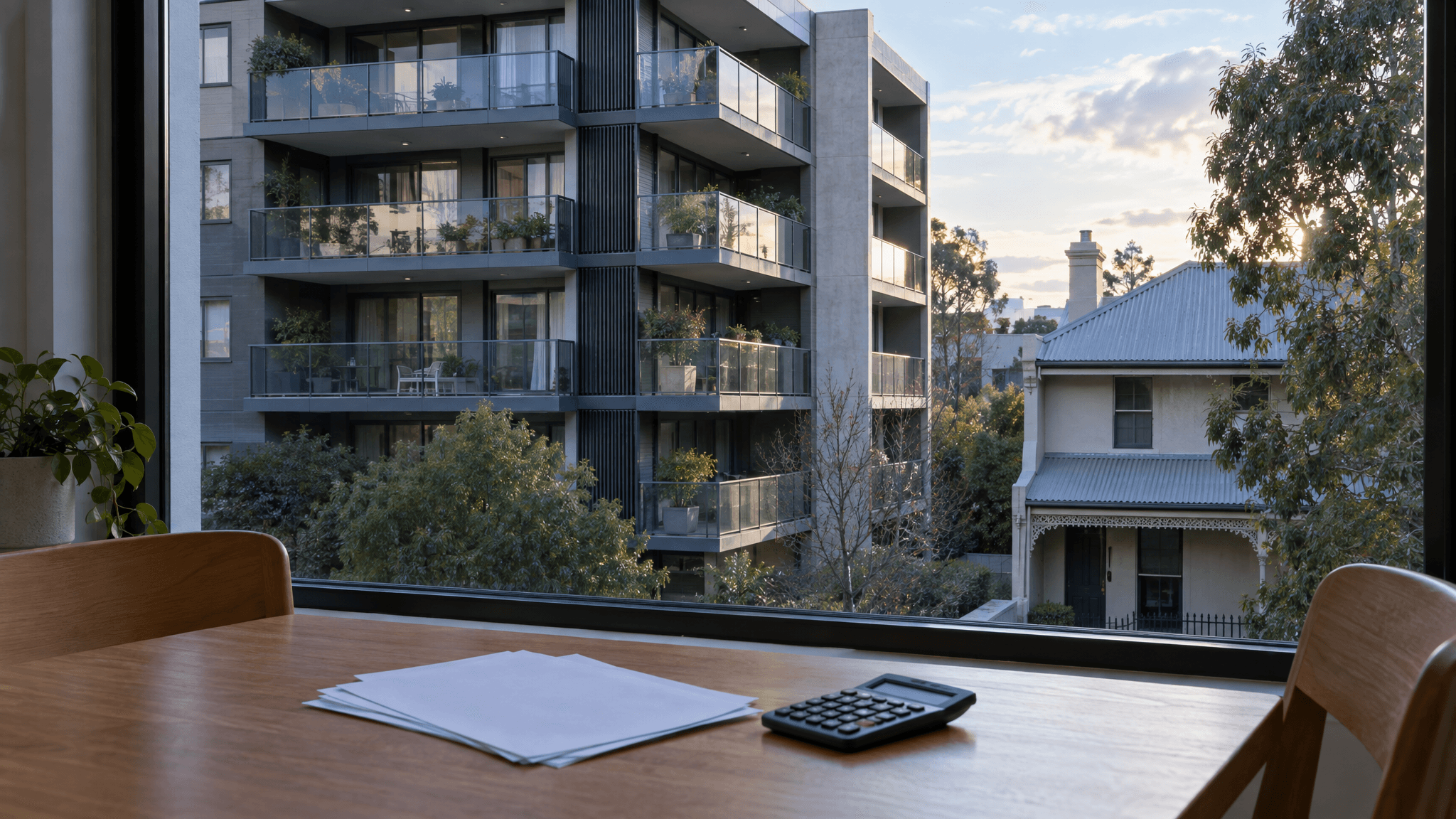
Victorian rental properties moved from a collective $702 million net profit to a $2.53 billion net loss in the space of two financial years, according to Australian Taxation Office figures analysed in a report published on Saturday.
The reversal between 2021-22 and 2023-24 was the largest of any state, realestate.com.au reported. Interest deductions associated with Victorian investment properties were equivalent to about 62 cents for every dollar of gross rent in 2023-24, before other expenses such as rates, insurance, repairs, management fees and depreciation were counted.
The figures show how quickly the economics of a highly leveraged rental property can change when financing and ownership costs rise faster than rent.
They also provide context for the debate over the federal government’s decision to redirect negative-gearing benefits towards new housing. However, a reported tax loss does not by itself prove that an owner is unable to meet repayments or must sell.
What the ATO numbers measure
The ATO’s rental tables record income and deductions declared in tax returns, broken down by the state or territory of the property and whether it produced a net rental profit or loss.
A net rental loss occurs when allowable deductions exceed declared rental income. Those deductions can include loan interest, council rates, insurance, agent fees, repairs, capital works deductions and eligible depreciation.
This means the tax result is not identical to a household cash-flow statement. Some deductions do not involve a matching cash payment during the year, while mortgage principal repayments are a cash cost but are not deductible. The data also says nothing about an owner’s salary, savings, equity or capital gain.
Even so, the scale of Victoria’s shift indicates that rental income was increasingly unable to cover deductible expenses across the state’s investor-owned housing. Owners carrying large variable-rate loans were particularly exposed to higher interest bills.
Negative-gearing treatment is changing
Under the 2026-27 federal Budget reforms, existing arrangements remain unchanged for properties held before 7.30pm AEST on 12 May 2026.
From 1 July 2027, investors who bought an established home after that Budget-night deadline will generally be unable to deduct excess residential rental losses from unrelated income such as wages. The losses can still be used against residential property income or carried forward for use in future years.
Investors buying eligible new housing will retain access to negative gearing against other income. The government says the distinction is designed to shift investment towards construction that adds to the housing supply rather than competition for established homes.
The old ATO data and the future tax rules should not be treated as the same issue. The $2.53 billion Victorian result covers 2023-24, before the policy was announced, and reflects the tax settings and property expenses that applied at the time. It nevertheless illustrates why the ability to offset a rental loss against wages can be financially valuable to a leveraged investor.
Established and new homes may attract different demand
The practical market effect is likely to vary by property type.
New apartments and house-and-land packages may become relatively more attractive to investors who want access to the broader negative-gearing treatment. Established investor-focused properties may need to compete more heavily for owner-occupiers, investors with substantial residential income or buyers willing to carry losses forward.
That does not mean established homes will lose all investor demand. Purchase price, rent, expected growth, maintenance, land value and the buyer’s financial position will continue to influence whether an investment is viable.
For sellers, the change makes it more important to understand the likely buyer pool. A property previously marketed mainly on tax deductions may need a stronger emphasis on rental yield, condition, location and owner-occupier appeal.
Higher costs do not automatically set rents
Victorian property representatives cited in Saturday’s report warned that investor pressure could reduce rental choice and increase rents. That is a risk if rental supply falls while tenant demand remains strong, but an individual landlord cannot automatically recover every additional expense through a rent increase.
Rents are constrained by what competing properties charge and what tenants can afford. An owner facing a larger shortfall may instead accept a lower return, reduce debt, buy a cheaper property or sell. If the buyer is a former renter becoming an owner-occupier, both a rental dwelling and a rental household leave the market.
The important question for tenants is therefore not simply how much landlords are paying. It is whether the number of available rentals keeps pace with the households seeking them in each local area.
What it means for you
- Investors should test repayments and other costs without assuming rent will cover every increase.
- Buyers comparing new and established investments need to account for the different tax treatment from 1 July 2027.
- Sellers of investor-oriented homes may face a changing buyer pool as tax advantages shift towards new supply.
- Renters should watch local vacancy and listing numbers, which are more useful than landlord costs alone when assessing rent pressure.