Victoria’s fast-track housing rules reduce objections in designated activity centres
Victoria’s deemed-to-comply pathway can limit objections and appeals when apartment proposals meet state standards, changing the risks for buyers and owners in activity centres.

RentBuy Team
4 min read
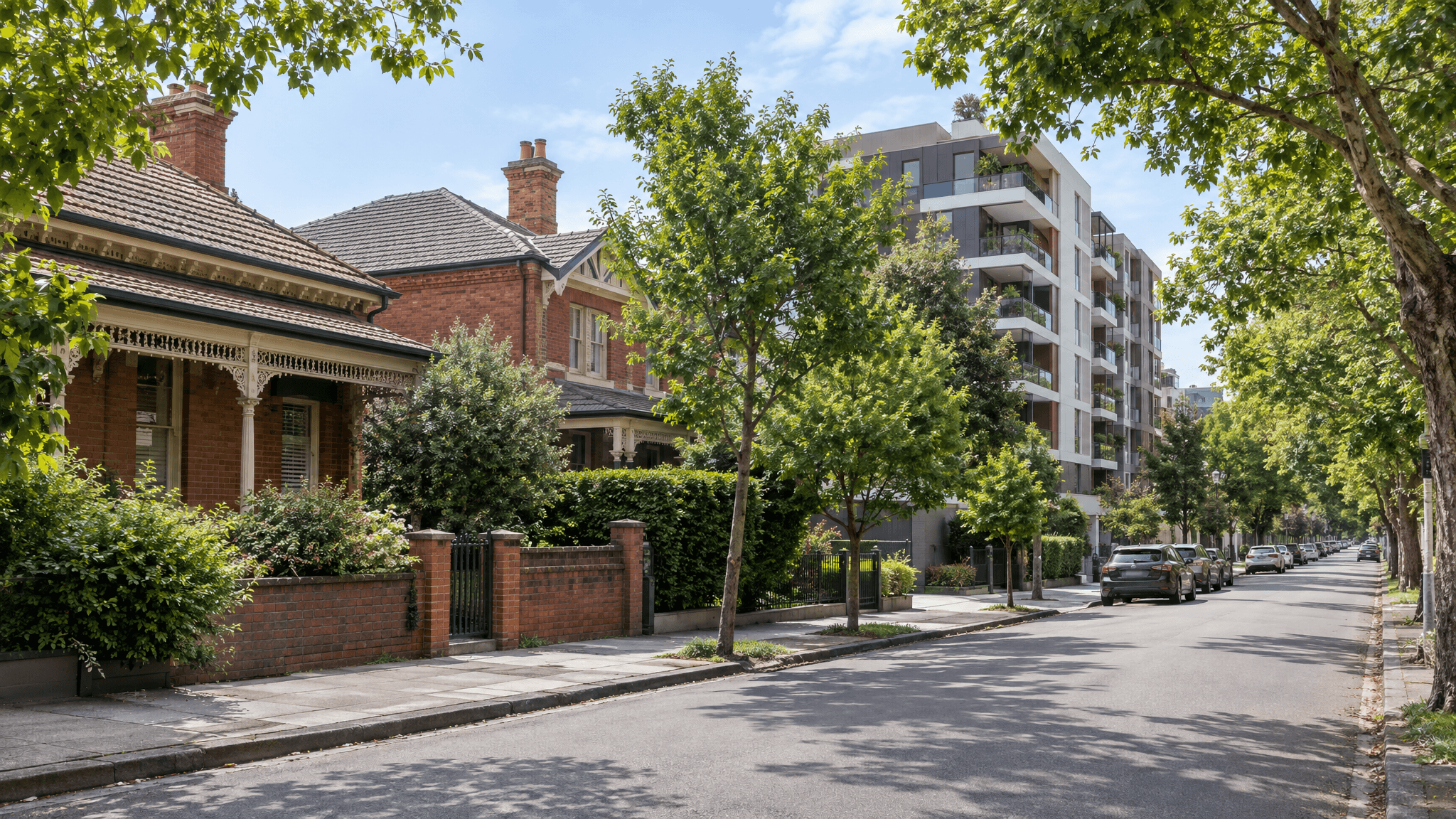
Victorian buyers and homeowners are being urged to look beyond a property’s immediate streetscape as the state’s new planning framework makes taller housing easier to approve in selected Melbourne suburbs.
ABC reporting published on Friday 23 October examined the practical effect of the government’s deemed-to-comply pathway, which began operating in April. Under the system, a proposal that satisfies prescribed state standards can proceed with much less scope for objections or third-party appeals.
The rules are part of Victoria’s activity centres program, which is intended to concentrate more housing around train stations, tram corridors, shops and existing services.
For people buying in one of the designated centres, the change means neighbouring land may have substantially more development potential than its current buildings suggest.
What deemed to comply means
Planning applications have traditionally allowed councils and nearby residents to argue that a proposal should be refused or altered because of issues such as scale, overlooking, traffic or neighbourhood character.
Under the new pathway, meeting the government’s standards is central. If the proposal ticks the required planning boxes, affected residents may have no conventional right to object or appeal against the approval.
Planning Minister Sonya Kilkenny told the ABC that developments meeting the relevant standards would not be open to objection. The government says this provides certainty, reduces delay and helps address a planning system that has failed to produce enough housing in well-serviced locations.
Councils and some residents argue that the approach reduces local influence over projects capable of significantly changing established streets.
The ABC highlighted an Armadale proposal that would replace five single-storey units with a six-storey building containing 29 apartments and two basement parking levels. The proposed site is about 900 metres from a train station.
The project remains an individual application rather than a model for every street. It nevertheless illustrates the type of change owners may encounter as the state planning controls begin to be used.
Sixty centres have been designated
Armadale is among 60 designated activity centres where the government is planning for more intensive development. Depending on the location and individual controls, the program allows buildings of up to 20 storeys or more in some areas.
Victoria estimates it will need another 2.24 million homes by 2051, with at least 70 per cent of that growth targeted for established areas.
The government argues that established suburbs already have transport, electricity, water, schools and employment access, even if parts of that infrastructure will need upgrading as populations increase.
Activity-centre development is also expected to attract contributions towards facilities such as parks, schools and road works. The timing of those improvements will matter to existing and incoming residents, because housing construction can proceed more quickly than major infrastructure upgrades.
What buyers should check
A standard building and pest inspection will not reveal what can be constructed next door. Buyers in affected suburbs should also investigate planning controls applying to surrounding sites.
Useful checks include:
- whether the property is inside or near an activity centre
- the preferred or maximum heights applying to nearby land
- whether adjacent lots could be combined for a larger development
- recently lodged planning applications and approved permits
- likely construction access, overshadowing and traffic effects
- whether an apartment’s outlook relies on adjoining low-rise land remaining unchanged.
The same planning potential can have different effects. A detached home on a suitable site may become more valuable to a developer, while an apartment owner could face years of construction or lose an open outlook.
More housing near transport can also improve an area by supporting shops, services and public investment. Buyers need to assess both the possible benefits and the disruption rather than assuming density is wholly positive or negative.
Political uncertainty remains
The Coalition has promised to scrap the activity-centres policy if it wins government, restore third-party appeal rights and give councils a greater planning role. Labor argues reversing the program would undermine the housing supply needed for Victoria’s growing population.
That contest creates policy uncertainty, but buyers should base immediate decisions on the controls currently in force. Future governments can amend planning policy, while existing approvals and applications may have their own legal status.
What it means for you
- Buyers in Melbourne activity centres should investigate nearby development potential before making an offer.
- A low-rise neighbouring property is not a guarantee that the street will remain low rise.
- Owners of larger or amalgamated sites may gain redevelopment value under higher-density controls.
- Objection and appeal rights may be limited where an application satisfies the deemed-to-comply standards.