Ipswich granny-flat lodgements jump 61% after planning rules are simplified
Ipswich recorded 155 secondary-dwelling lodgements in a year, up from 96, after its new planning scheme allowed eligible granny flats to bypass a separate planning application.

RentBuy Team
4 min read
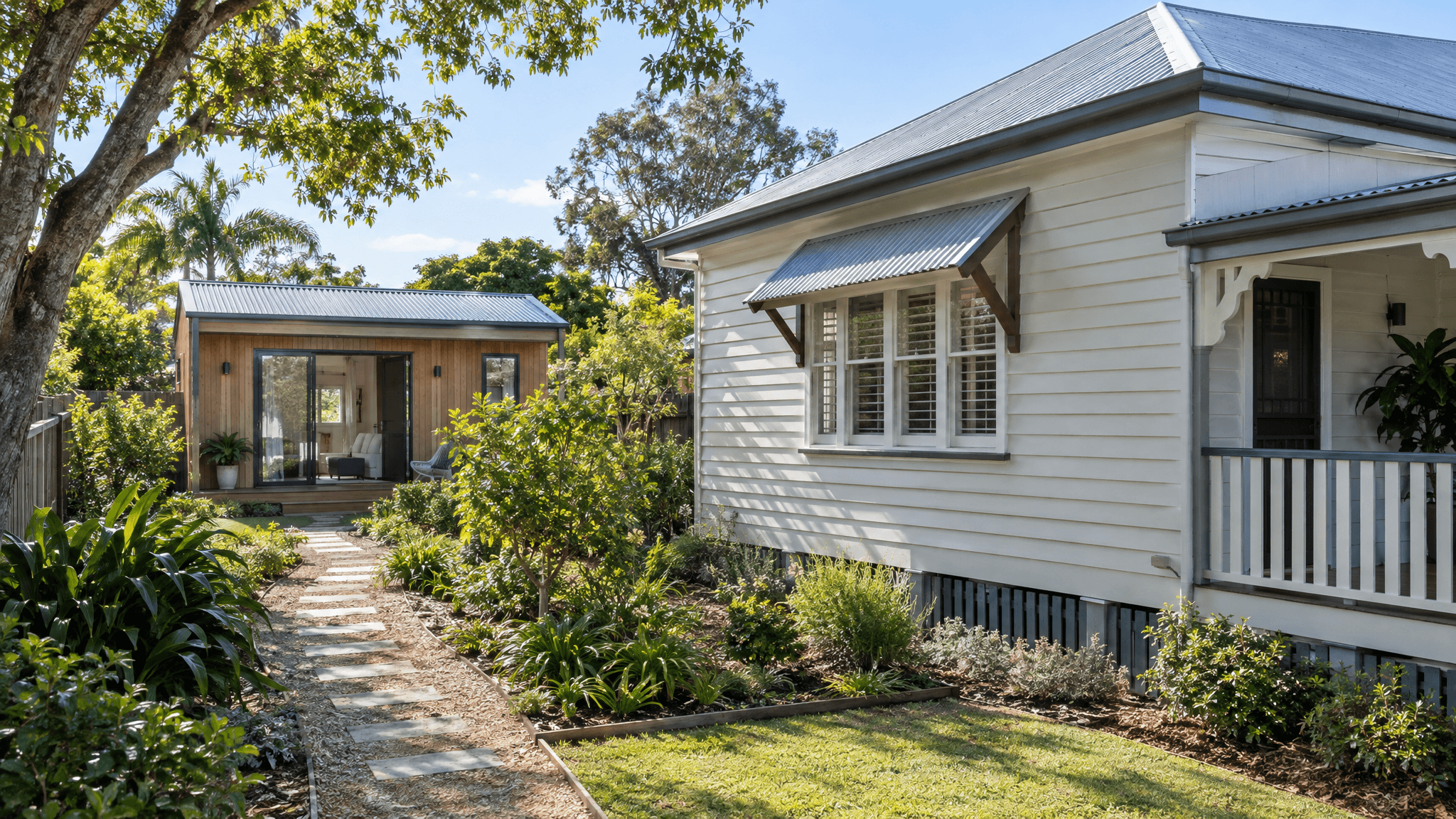
Granny-flat activity has risen sharply in Ipswich after the city simplified the planning pathway for eligible secondary dwellings.
Ipswich City Council said on Friday that it received 155 secondary-dwelling building approval lodgements in 2025-26, a 61 per cent increase from the 96 recorded in the previous financial year.
The increase followed the introduction of Ipswich City Plan 2025 in July last year. Under the scheme, a secondary dwelling that satisfies the relevant planning requirements can proceed without a separate planning application, although building and plumbing approvals may still be required.
Council estimates that more than 22,000 properties across Ipswich may be eligible for a secondary dwelling through this pathway. It does not impose infrastructure charges on secondary dwellings that do not require planning approval.
The result provides an early indication that reducing the planning work attached to smaller infill homes can prompt owners to make greater use of established residential land.
Small homes within existing suburbs
A secondary dwelling, commonly called a granny flat, is a smaller home located on the same lot as a principal residence. It can be attached to the main house or constructed as a separate building, but it remains subordinate to the primary dwelling.
These homes can accommodate older relatives, adult children or other small households. They can also generate rental income for an owner-occupier and add housing without requiring a new subdivision or an expansion of the city’s suburban boundary.
Queensland removed statewide restrictions on who could occupy a secondary dwelling in September 2022. A lawful granny flat can therefore be rented to someone who is not related to the occupants of the main house, subject to its approvals and any existing conditions.
Ipswich’s newer local rules address the separate question of whether planning approval is required to build one. Eligible proposals can be treated as accepted development subject to requirements, avoiding a full development application when the design and property comply with the scheme.
Eligibility is not automatic
Council’s estimate of 22,000 potentially eligible properties does not mean every owner can immediately begin construction.
The zoning, lot size, proposed floor area, setbacks, access, existing buildings and planning overlays applying to an individual property still matter. Flood risk, difficult topography, heritage controls and infrastructure constraints can change the approval pathway or limit where a secondary dwelling can be placed.
Building and plumbing approvals also remain necessary. Owners intending to rent the new home should obtain advice about fire separation, smoke alarms, sound transmission, utility connections, access and tenancy requirements.
A building approval lodgement is also not the same as a completed rental home. Some approved projects may be delayed, redesigned or never constructed, so the 61 per cent increase should be viewed as an indicator of owner interest rather than an immediate addition of 155 occupied dwellings.
Part of a broader supply push
Ipswich City Council says the planning scheme is intended to accommodate about 100,000 additional homes over the next 20 years. It also encourages townhouses and low- to medium-rise housing in suitable locations near transport, centres and services.
Overall development activity increased alongside the rise in secondary dwellings. Council received 1,116 development applications in 2025-26, compared with 988 in the preceding year.
Granny flats will not deliver the volume of housing available from major estates or apartment projects. They can nevertheless provide incremental supply relatively quickly because they use existing residential lots and much of the surrounding infrastructure is already in place.
They may also offer smaller and potentially cheaper rental options, although they are not necessarily subject to formal affordable-housing rent limits.
What it means for you
- Ipswich owners may have a simpler pathway to add a granny flat, but must check the rules applying to their specific property.
- Buyers should not pay a premium for development potential until zoning, overlays, servicing and approval requirements have been verified.
- Existing lawful secondary dwellings in Queensland can generally be rented to unrelated tenants.
- More lodgements could gradually expand Ipswich’s supply of smaller rentals, but approvals do not guarantee construction.