NSW places 15 housing proposals for 2,700 homes on state-significant pathway
Fifteen apartment and shop-top housing proposals have entered the NSW state-significant assessment pathway, but they still require applications, assessment and approval.

RentBuy Team
3 min read
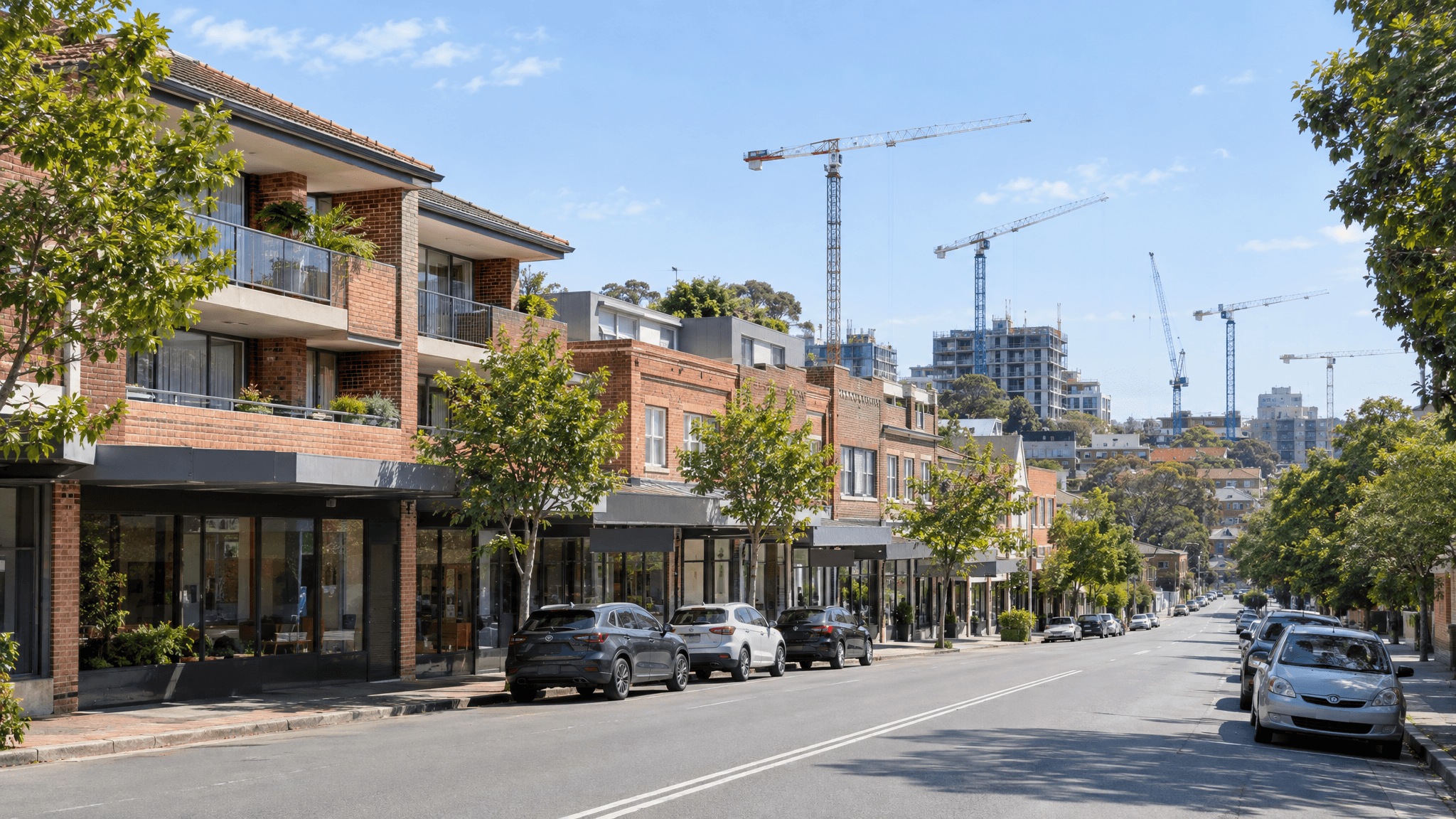
Fifteen proposed housing developments with capacity for more than 2,700 homes have been declared state significant by the NSW Government, moving them onto a centralised planning pathway.
The projects include apartment buildings, shop-top housing and seniors housing, with affordable housing proposed at every site listed in the ministerial order published on Wednesday 25 November.
Thirteen proposals are in metropolitan Sydney and two are in the Illawarra-Shoalhaven region. The locations include Carlingford, Eastwood, Darlinghurst, Hurstville, Lane Cove, Cremorne, Kensington, Cronulla, Woolooware, Castle Hill and Northbridge, along with Gerringong and Kiama.
The declaration follows recommendations from the Housing Delivery Authority, which assesses expressions of interest from proponents seeking access to the state-significant development process.
Declaration is not development approval
The headline figure is potential capacity rather than an approved construction program. A state-significant declaration allows a proposal to be lodged and assessed through the NSW system, but it does not settle questions such as building height, design, traffic, infrastructure, environmental impacts or the final number of dwellings.
Proponents must prepare full applications, which are then assessed before an approval can be issued. Conditions may change a project and an application can still be refused or withdrawn.
That distinction matters for buyers and residents trying to understand when new supply will become available. Even after planning approval, developers must secure finance, appoint a builder, meet pre-sale requirements where applicable and decide whether market conditions support construction.
The government said the Housing Delivery Authority has now recommended 520 state-significant proposals with capacity for more than 160,000 homes. Of those, 104 applications representing about 40,500 homes have been lodged.
Only 33 proposals, covering more than 7,700 homes, have so far been approved, while construction has started at 11 sites. Another 32 declarations have been revoked because deadlines were not met or proponents decided not to proceed.
Those figures show both the scale of the pipeline and the distance between an early planning milestone and a completed home.
Affordable housing is spread across the round
The ministerial order describes all 15 proposals as including affordable housing. It does not, however, provide the number, proportion, tenure or length of time for which those homes would remain affordable.
Those details should become clearer when individual state-significant development applications are lodged. Prospective buyers, renters and surrounding communities will then be able to examine the proposed dwelling mix, affordable housing commitment, building envelope and supporting infrastructure.
The geographical spread is also notable. Most proposals are in established Sydney suburbs where assembling sites and obtaining approval can be difficult, including the eastern suburbs, lower north shore, Sutherland Shire and north-west Sydney.
Many are residential flat buildings, while the Carlingford, Darlinghurst, Lane Cove, Kiama and Northbridge proposals include shop-top housing. These formats can add homes near existing services without waiting for entirely new suburbs and infrastructure networks to be created.
However, accelerating assessment addresses only one part of housing delivery. High construction costs, expensive finance and weaker buyer demand can still prevent an approved project from moving to the building stage.
What it means for you
- A state-significant declaration is an assessment pathway, not permission to start construction.
- Buyers and renters should watch for the individual applications, which will contain the useful details about dwelling numbers and affordable housing.
- Nearby owners may gain a clearer view of future density once building envelopes and supporting studies are published.
- The large headline pipeline will improve supply only if proposals progress through approval, finance and construction.