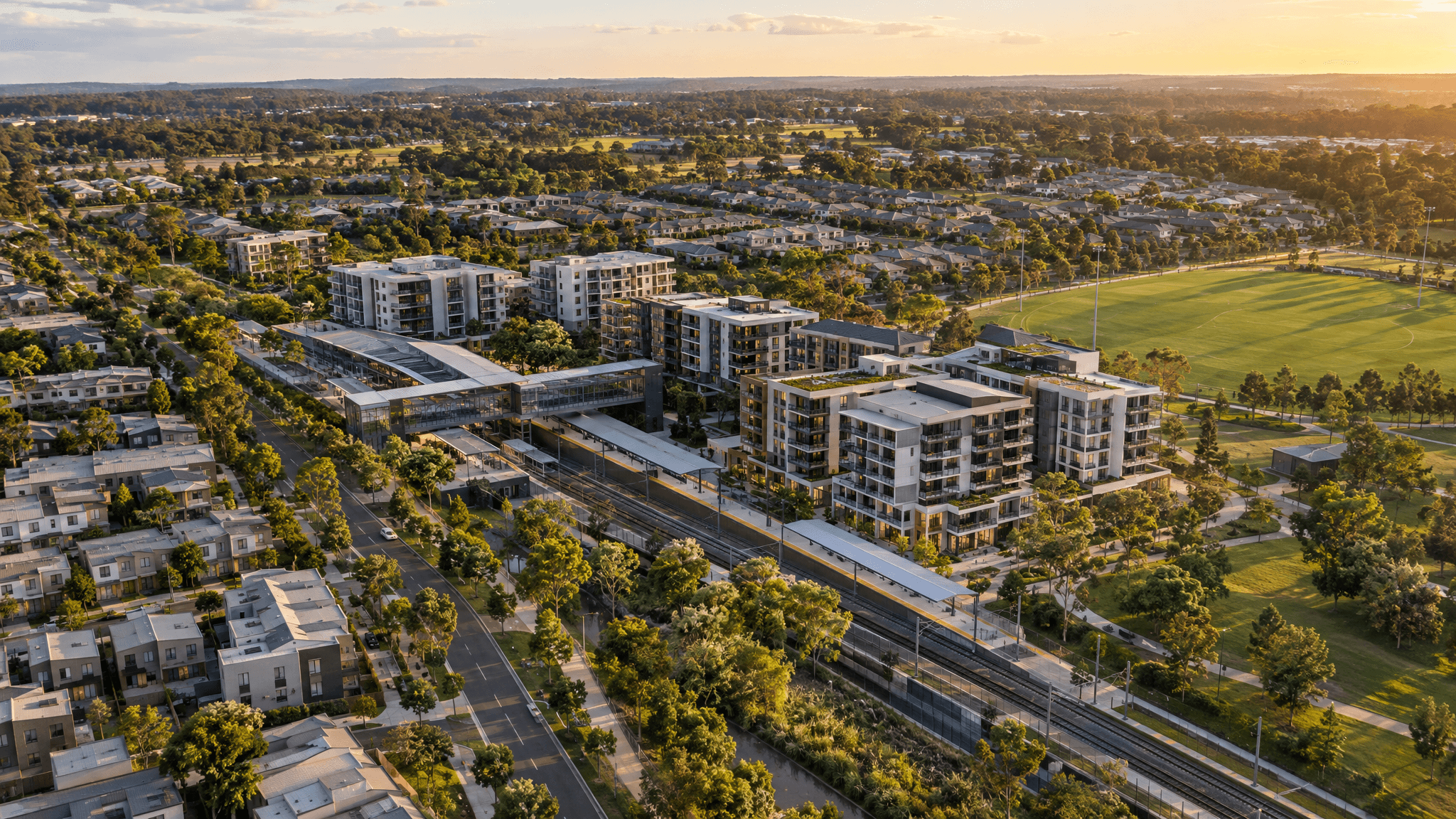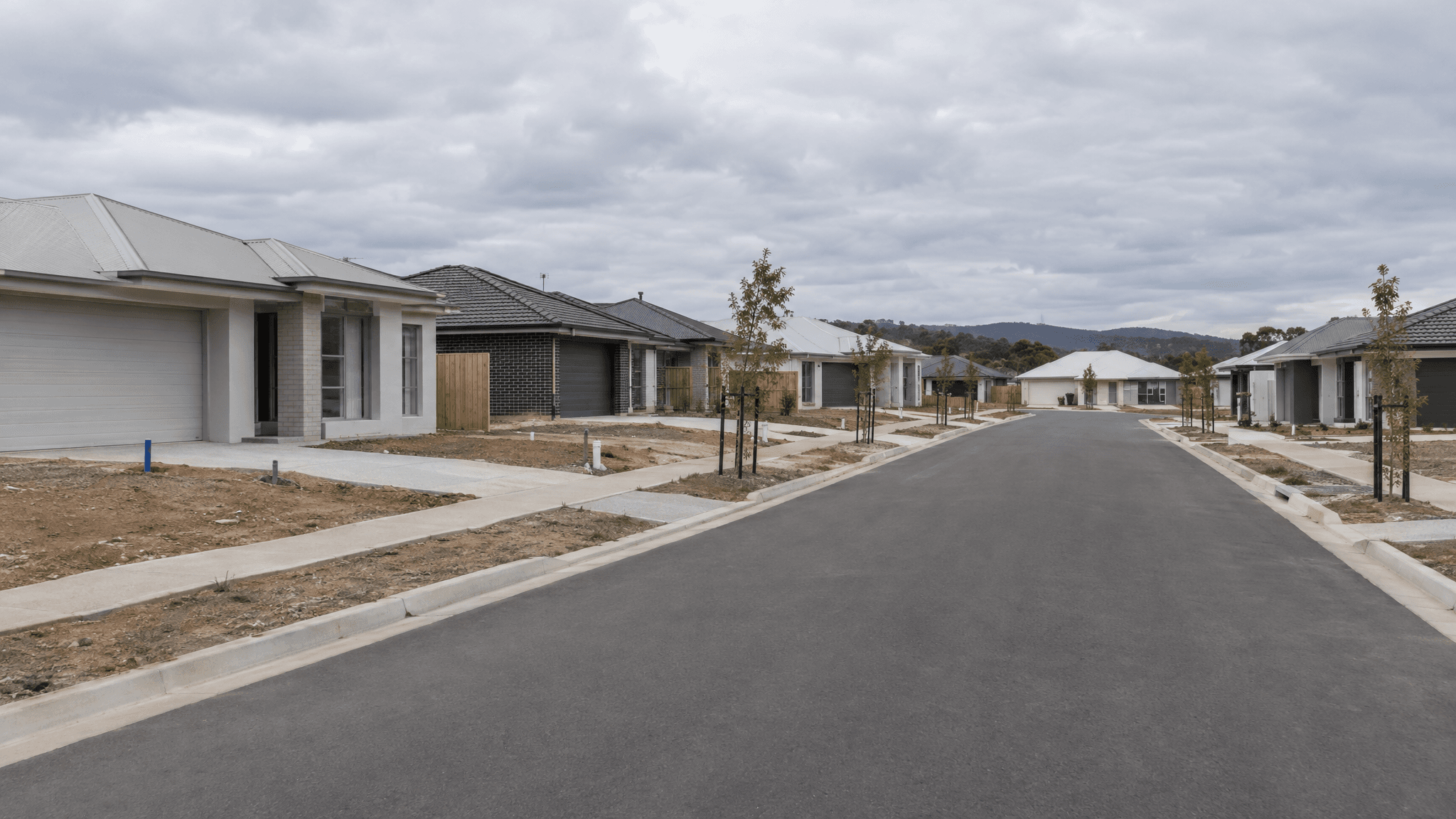
Canberra brings forward transit upzoning and reviews development charge
The ACT plans more mid-rise housing along its northern transport corridor while considering changes to the Lease Variation Charge that could affect project feasibility.

RentBuy Team
4 min read
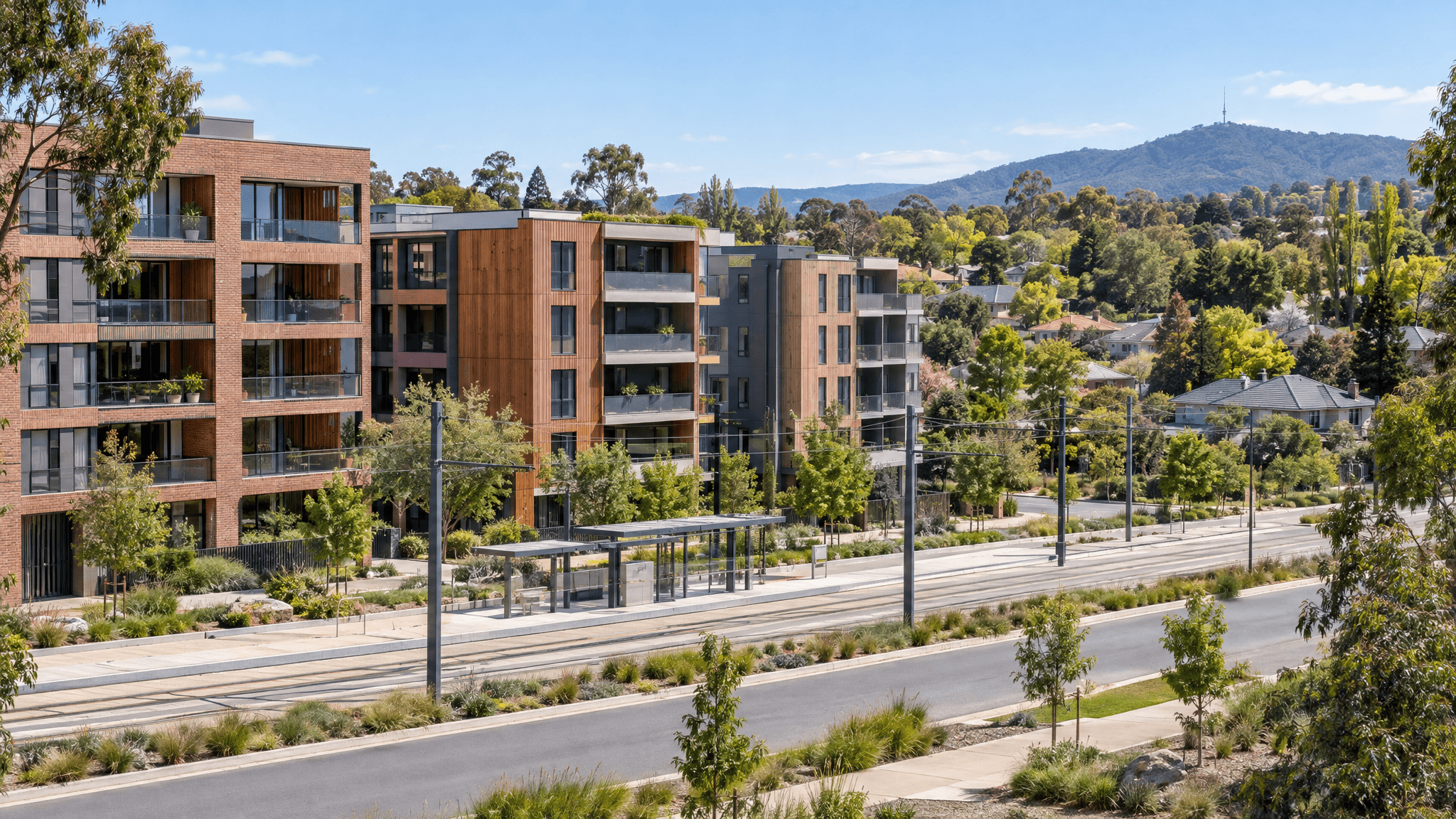
More land near Canberra’s light rail and rapid bus routes is set to be considered for higher-density housing as the ACT Government brings forward the next stage of its transit-oriented planning reforms.
Planning and Sustainable Development Minister Chris Steel outlined work on two Major Plan Amendments at the Property Council’s Capital Region Housing Summit on Tuesday. Further details were reported by Region Canberra on Wednesday.
The government is updating a proposal covering Lyneham, Downer and Watson, with an amendment expected to be introduced during the first quarter of 2027. It will also prepare a draft amendment for the broader corridor from Dickson to Civic.
The plans are intended to allow more mid-rise and multi-unit housing within walking distance of light rail stops and other rapid transport services. They remain proposed planning changes, meaning the final boundaries, building controls and development capacity will depend on consultation and the amendment process.
Why the northern corridor is changing
Steel said 56 per cent of Canberra’s residential land within 800 metres of rapid bus or light rail services remained subject to highly restrictive controls.
The government’s argument is that allowing greater density near established transport, shops and jobs can provide more housing without relying entirely on new suburbs at the city’s edge. It can also support more frequent services and spread existing infrastructure across a larger population.
The first amendment prioritises Lyneham, Downer and Watson because some land close to public transport remains limited to relatively low-density development. A second piece of work will examine transition areas between the Northbourne Avenue corridor and established suburban streets from Dickson towards Civic.
For current owners, upzoning can create development potential but does not guarantee an immediate increase in sale value. Lot dimensions, access, trees, heritage considerations, construction costs and demand all influence whether extra capacity is commercially usable.
Development charges are also under review
The government is separately considering changes to the Lease Variation Charge, or LVC. The charge can apply when a Crown lease is varied to permit a more valuable use, including additional housing.
Options raised by Steel include:
- setting more charges through published schedules to improve upfront certainty
- clarifying which public infrastructure works can offset an LVC obligation
- simplifying and accelerating lease variation processes
- widening exemptions for lower-risk variations
- allowing staged payments for large precinct developments.
Recommendations are expected to be released for consultation in early 2027. No final changes have been adopted, so developers and landowners should not yet base feasibility calculations on a lower or deferred charge.
The Property Council welcomed the review, arguing that extra development rights will not produce housing if projects cannot secure investment or finance. That is an industry position, but it identifies an important delivery issue: zoning determines what may be built, while charges, building costs, market prices and lending conditions determine whether construction proceeds.
A region-wide supply challenge
Separate preliminary modelling released by the Property Council and Urban Intelligence estimates that the ACT and six surrounding NSW council areas could need between 160,000 and 175,000 additional dwellings by 2060.
The modelling projects the wider region could grow from about 654,000 residents in 2025 to slightly more than one million. It identifies potential capacity for about 129,000 to 164,000 dwellings, although that estimate will be tested through further industry and stakeholder work before a final report expected in 2027.
Those figures are forecasts rather than government housing targets. They nevertheless show why Canberra’s planning debate increasingly includes Queanbeyan, Yass and other communities beyond the ACT border.
What it means for you
- Buyers could see more apartments and townhouses offered near inner-north transport routes, but planning and construction will take time.
- Owners in Lyneham, Downer, Watson and the Dickson-to-Civic corridor should watch the amendment maps and consultation documents.
- Developers should continue using existing LVC rules until any reforms are formally adopted.
- More zoning capacity will not automatically produce cheaper housing without infrastructure, viable projects and sustained construction.