Tasmania moves closer to guaranteeing finance for modular home buyers
Tasmania’s lower house has passed legislation allowing the state to support loans while modular homes are built off-site, addressing a financing gap that can block otherwise eligible buyers.

RentBuy Team
4 min read
Tasmania has moved closer to introducing a government guarantee for loans used to buy modular homes, after enabling legislation passed the state’s House of Assembly on Thursday.
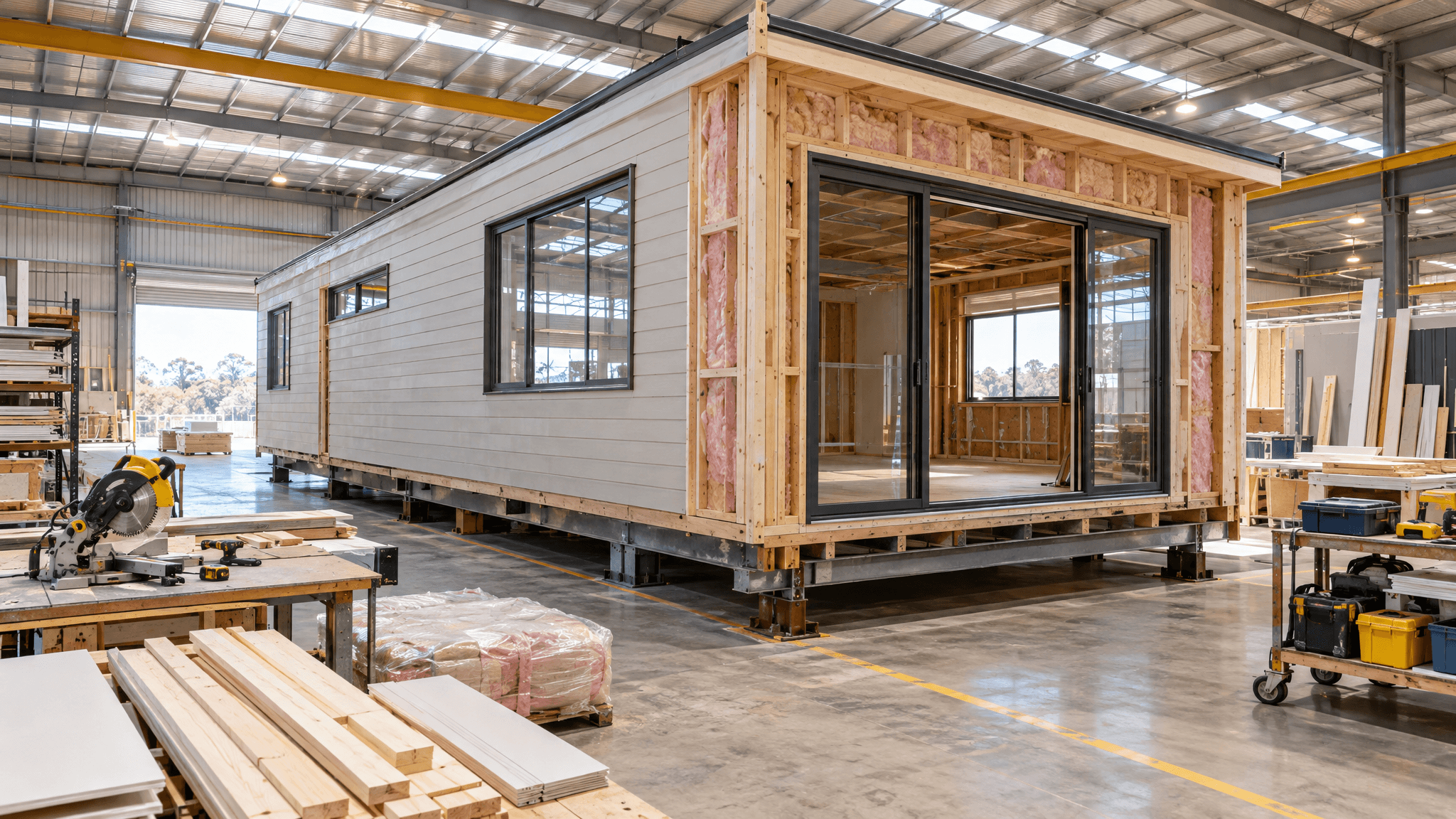
The proposed Modular Housing Finance Guarantee is designed to address a specific problem in off-site construction. A conventional construction lender usually releases money as work becomes part of the house and land that secure the mortgage. With a modular home, much of the value can be created inside a factory before anything is installed on the buyer’s block.
That can leave a lender with limited property security during an important part of the build, even where the borrower would otherwise qualify for finance. It can also leave the manufacturer carrying substantial costs until the modules reach the site.
The Tasmanian Government said the guarantee would support lending during that factory phase. Under its previously announced model, the state’s exposure would reduce as construction progressed and end once the home was installed and could become normal mortgage security.
The bill will now proceed to Tasmania’s Legislative Council. Passing the lower house does not mean the scheme is open for applications.
Important details are still to come
The legislation establishes the framework for the government to guarantee eligible loans, but Treasury has said many of the operational rules will sit in regulations and scheme documents.
Those details are expected to include:
- who can qualify as an eligible buyer
- which lenders can participate
- which builders and modular-home systems will be approved
- the maximum guarantee available for an individual loan
- any overall limit on the state’s exposure
- circumstances in which a guarantee can end or be called upon.
The scheme is intended for residential structures manufactured away from their final location, transported to the site and permanently installed. The government has also said safeguards will include approved lenders and accredited Tasmanian builders.
Normal loan approval requirements are not expected to disappear. Buyers would still need to satisfy the participating lender’s checks covering income, expenses, deposit, credit history and ability to make repayments.
In practical terms, the guarantee is aimed at the lender’s security problem rather than at replacing a buyer’s deposit or making an unaffordable loan affordable.
Why modular finance works differently
Modular construction can shorten the physical building program because site preparation and factory work can proceed at the same time. Factory conditions can also provide greater control over weather exposure and some production processes.
The finance sequence, however, can be awkward. A traditional lender can inspect foundations, framing and later building stages at the borrower’s land before releasing progress payments. With a modular home, completed work may be sitting in a factory owned by another business and may not yet form part of the mortgaged property.
Tasmania’s proposed guarantee is meant to give lenders confidence to fund that period. If it attracts participating banks and works with builders’ payment schedules, it could widen the range of construction options available to eligible buyers.
The final effect on prices is less certain. Finance is only one element of a modular project’s total cost, alongside land, design, manufacturing, transport, foundations, utility connections, approvals and installation. Buyers will still need to compare complete fixed-price proposals rather than focusing only on the cost of the factory-built structure.
What buyers should check
Anyone considering a modular home should wait for the final regulations and participating-lender information before assuming their project will qualify.
Contracts should clearly identify who is responsible for approvals, site works, transport, craning or installation, utility connections and rectification of defects. The payment timetable should also align with the lender’s approved drawdowns, particularly during off-site production.
The scheme may be most useful where a buyer is financially capable of servicing the loan but the lender is uncomfortable releasing funds against work that has not yet been attached to the land.
What it means for you
- The guarantee is not available yet and still requires further parliamentary and operational steps.
- Buyers will remain subject to normal lender affordability and credit assessments.
- Final eligibility, guarantee limits and participating lenders have not been published.
- Compare the full delivered and installed cost of a modular home, not just its factory price.