First NSW pattern-book homes put fast-track planning promise to the test
Four Corrimal row homes are nearing completion using a NSW pattern-book design. The project suggests approvals can be shortened, but limited statewide construction shows standard plans are only one part of the housing challenge.

RentBuy Team
4 min read
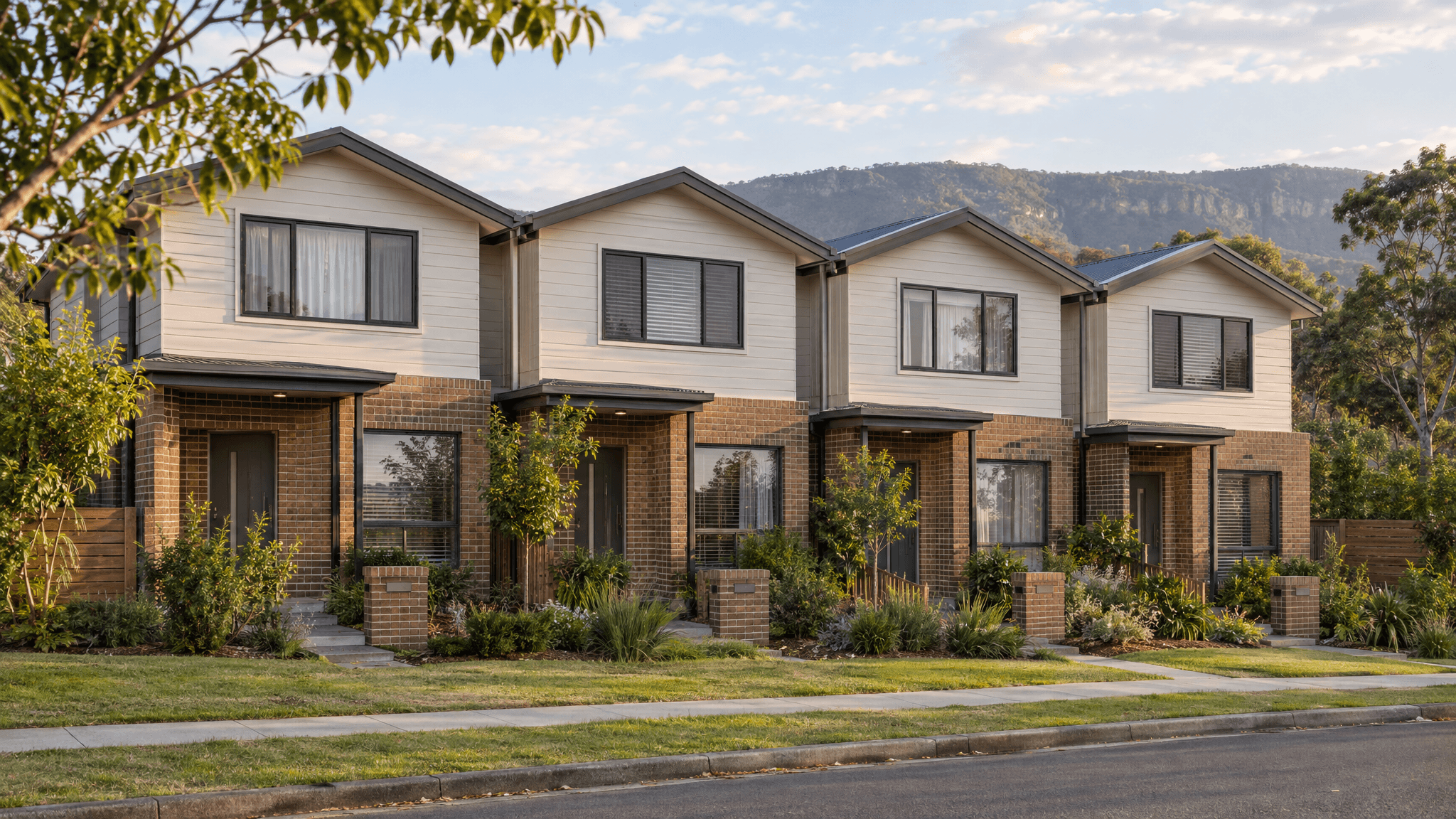
Four row homes nearing completion in Corrimal are set to provide the first practical test of the NSW Government’s Housing Pattern Book, which offers standard architectural designs and a faster planning pathway for eligible projects.
ABC Illawarra reported on Saturday that the development north of Wollongong was aiming for completion by the end of November. Three homes could be occupied by Christmas, with the larger fourth dwelling expected to be offered for sale later.
The project uses a row-house design bought during the introductory period when low-rise plans cost $1. Those plans now cost $1,000, still substantially less than commissioning a complete custom architectural package.
The milestone matters because the program’s value cannot be measured by design purchases alone. More than 25,000 patterns have been purchased, according to the ABC, but only 22 projects were under construction. Fewer than 60 applications had been lodged across the broader program, of which 45 had been approved.
Where the time can be saved
The low-rise designs cover semi-detached homes, terraces, row homes and manor houses. They come with technical information and can be adjusted within specified limits for different sites, layouts and bedroom numbers.
Eligible low-rise projects can also use the NSW Pattern Book complying-development pathway. NSW Planning says a complying development certificate can be determined in 10 days, compared with 20 days under the ordinary complying-development process.
That does not mean construction begins 10 days after someone buys a plan. The proposal must be permitted in the relevant zone, fit the site and satisfy the Pattern Book Development Code. Professional input may still be required from an architect or accredited designer, certifier, engineer, builder and other advisers.
The Corrimal builder told the ABC that the project received approval in eight weeks, compared with an estimated 12 months through the conventional pathway. He estimated the project cost about $600,000 less than an ordinary development, although that is a claim about this particular build rather than a guaranteed saving for other sites.
For small developers and landowners, the clearest potential benefit is greater certainty before construction. Starting with an endorsed design may reduce repeated drafting and planning work, while the faster pathway can lower holding costs if the site and proposal qualify.
Why uptake remains limited
The numbers also show that affordable plans do not remove the largest barriers to delivering new homes.
Land prices, finance, site preparation, construction materials, labour and infrastructure remain major costs. NSW Planning’s guidance says the final cost depends on development and construction expenses, landscaping and professional advice. A standard plan therefore reduces one part of the process rather than making the home itself inexpensive.
There are planning limits as well. The low-rise complying-development pathway generally applies in R1, R2 and R3 zones, and the proposed housing type must already be permitted on the land. Sites affected by constraints or proposals that depart from the pattern may need a full development application.
The mid-rise section of the Pattern Book provides designs for apartment buildings of three to six storeys, but those projects still require assessment through the development application system. They do not receive the same 10-day pathway available to qualifying low-rise designs.
The Corrimal completion will consequently be an important demonstration rather than proof of a statewide construction surge. If completed homes perform well, builders may gain confidence that the designs can be adapted and delivered commercially. The more important measure will be whether approvals and construction starts grow beyond the current small base.
What it means for you
- Landowners should check zoning, minimum site requirements and other constraints before purchasing a pattern.
- The advertised design price does not include building, engineering, certification, finance or site costs.
- Buyers considering a completed pattern-book home should assess build quality, strata or title arrangements and ongoing costs as they would for any new property.
- Faster approval may reduce delay and holding costs, but it does not guarantee an affordable final sale price.