More than 10,000 Brisbane and Gold Coast apartments are on hold
New data identifies 112 deferred apartment projects worth about $5.4 billion, showing why planning approvals alone will not quickly relieve south-east Queensland’s housing shortage.

RentBuy Team
5 min read
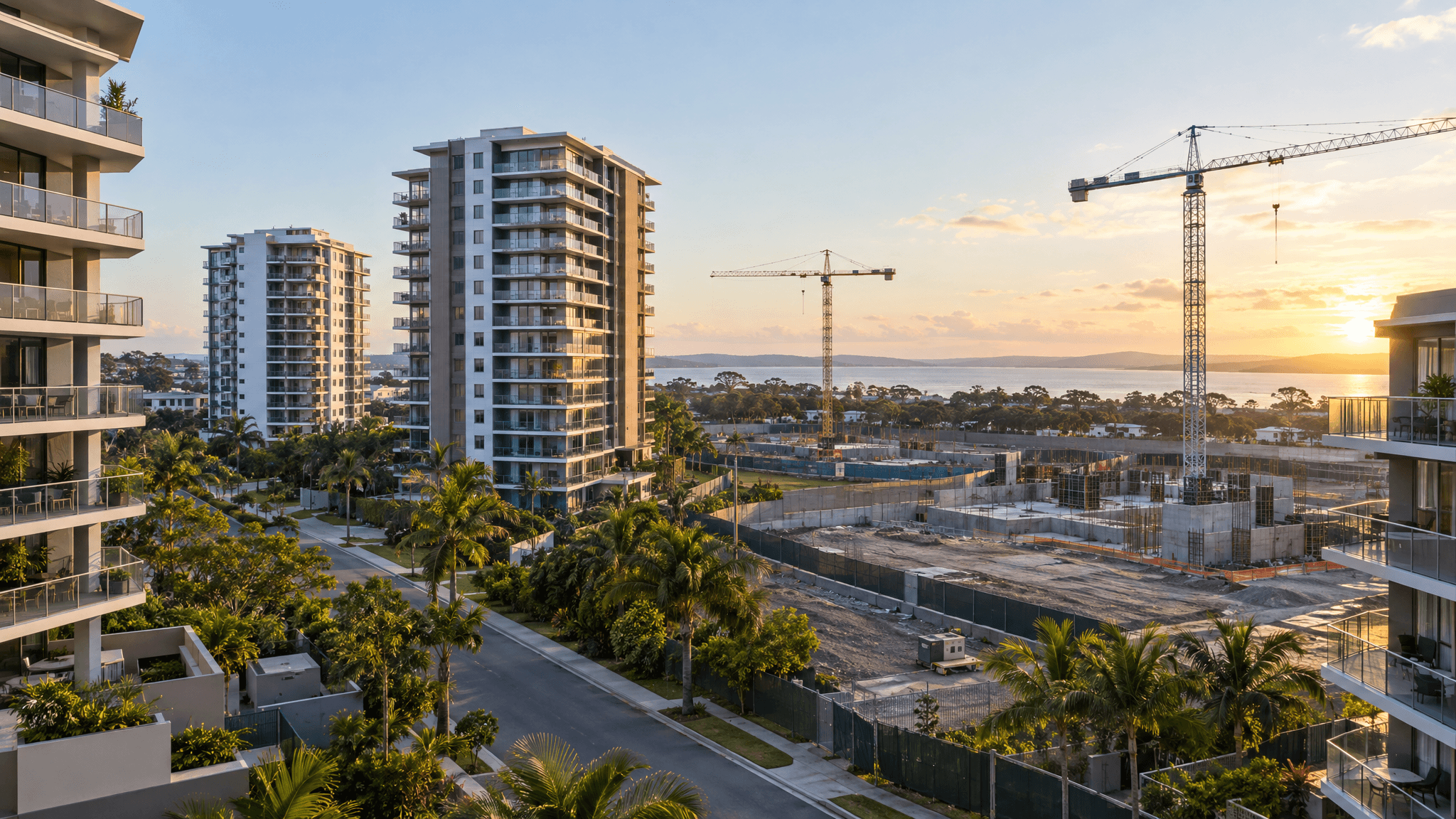
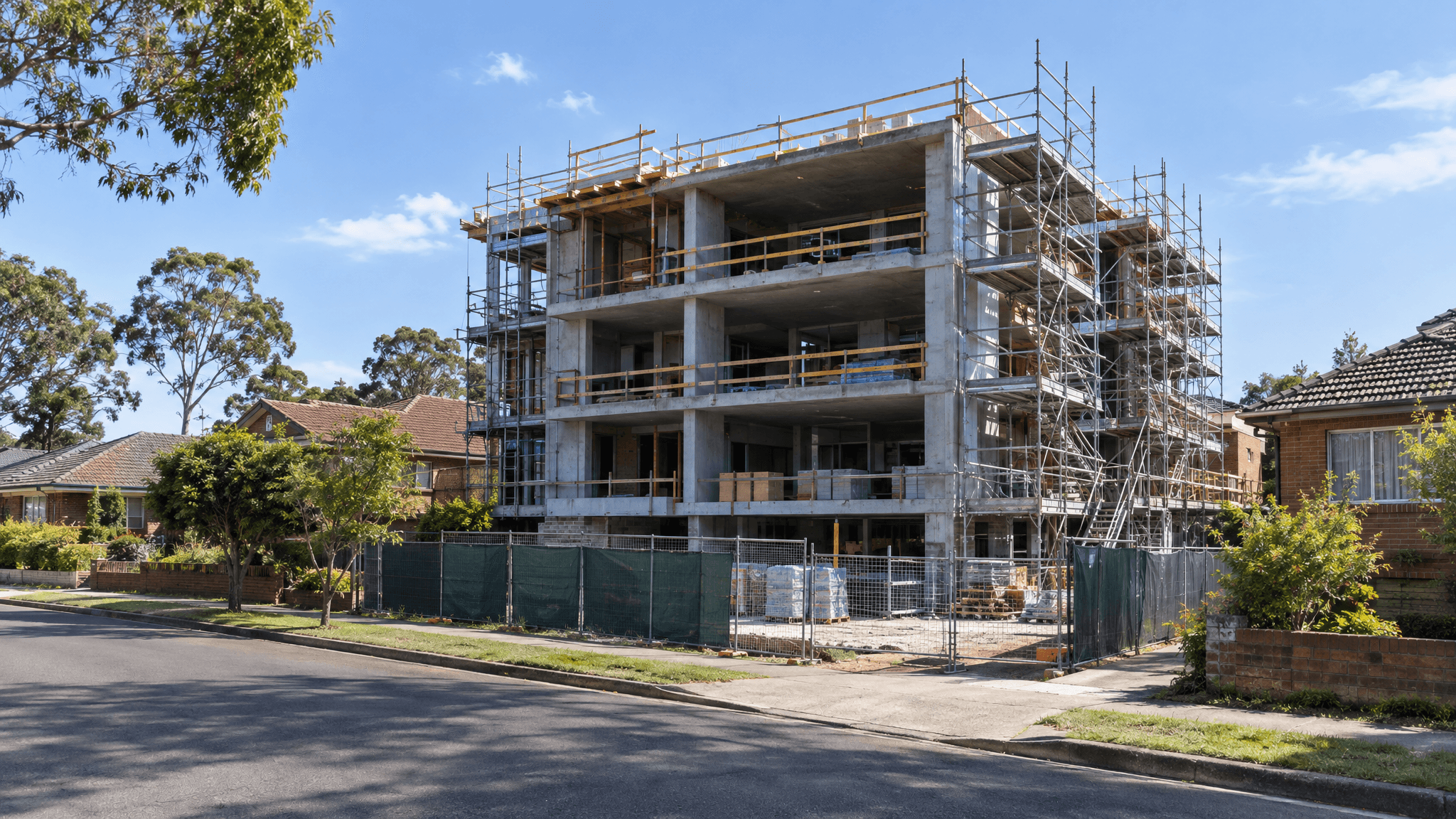
More than 10,000 planned apartments across Brisbane and the Gold Coast have been delayed, exposing a large gap between the homes appearing in the development pipeline and those likely to reach residents soon.
PRD data reported by realestate.com.au on Sunday identified 112 apartment projects containing 10,286 dwellings where construction had been postponed or placed on indefinite hold. Their estimated development value totals about $5.4 billion.
Brisbane accounts for 71 of the projects and 6,711 proposed apartments, representing almost $2.5 billion of development. On the Gold Coast, 41 projects containing 3,575 apartments have been deferred, with an estimated value of $2.9 billion.
The figures were current to September 2026. They do not mean every apartment has been permanently cancelled, but they show why approvals and project announcements can overstate the amount of housing that will actually become available.
Why approved projects are not becoming homes
PRD chief economist Diaswati Mardiasmo said escalating material and labour costs were creating major difficulties for developers. The number of deferred Brisbane apartments was almost equal to the number in projects beginning construction, according to her analysis.
Research cited in the report by property advisory firm Charter Keck Cramer illustrates the feasibility problem. It found the cost of delivering a comparable middle-ring Brisbane apartment rose by 105 per cent between 2020 and 2025, from about $345,000 to almost $710,000 per dwelling.
Developers generally need projected apartment sales to cover land, construction, finance, professional fees and other costs. When building costs rise faster than achievable sale prices, a project can have planning permission but still be unable to secure finance or appoint a builder.
Builder availability is another constraint. Charter Keck Cramer said many Brisbane apartment builders already had work booked for the next three to four years. It expects competition for labour and materials to become more intense from the 2027–28 financial year as Olympic-related construction accelerates.
The deferred list is not confined to one part of the market. It includes large mixed-use schemes, build-to-rent proposals and a Brisbane project incorporating affordable and social housing. Delays can therefore affect private buyers, tenants and households waiting for below-market housing.
Deferred does not necessarily mean abandoned
The classification needs to be treated carefully. Developers contacted for the report said some projects identified as deferred remained active but were waiting on factors such as existing commercial leases, revised planning applications or the completion of higher-priority developments.
PRD separately identified 10 projects classified as abandoned. These represented only 49 dwellings and about $22.5 million in estimated development value, far less than the broader deferred pipeline.
That distinction matters. Some of the 10,286 apartments may eventually proceed if construction costs stabilise, builders become available or developers can obtain enough pre-sales and finance. The immediate problem is timing: delayed apartments cannot ease current competition for homes.
Earlier Urbis research cited by realestate.com.au found 35 per cent of Brisbane apartment projects scheduled beyond 2027 faced a moderate or high risk of delay. On the Gold Coast, about 60 per cent of apartments planned for completion in 2028 and 2029 carried a similar risk.
Pressure flows through to buyers and renters
A thinner supply pipeline can help support the value of completed apartments, but it reduces choice for first-home buyers who often use units as a lower-cost entry point. Buyers considering off-the-plan property should look beyond development approval and ask whether construction finance, pre-sales and a building contract are in place.
The report also raised the prospect of settlement risk. A buyer who signed an off-the-plan contract years earlier may find that a lender will no longer provide the expected loan if borrowing capacity has fallen or the completed apartment receives a lower valuation.
For renters, the effect is more straightforward. Every lengthy delay postpones the point at which a new apartment can become an owner-occupied home or rental. With population growth continuing to add demand, fewer completions make it harder for new supply to relieve competition.
The data demonstrates that housing delivery depends on more than rezoning land and approving applications. Projects must also remain financially viable, attract funding, secure a builder and progress through construction before they contribute a single usable home.
What it means for you
- Off-the-plan buyers should check a project’s finance, pre-sales, builder and expected construction start, not just its approval status.
- Brisbane and Gold Coast renters should not assume the large approved pipeline will quickly translate into more available homes.
- Existing apartment owners may benefit from restricted new supply, although interest rates and local buyer demand still affect prices.
- A deferred project is not necessarily cancelled, but its delivery date should be treated as uncertain until construction is underway.