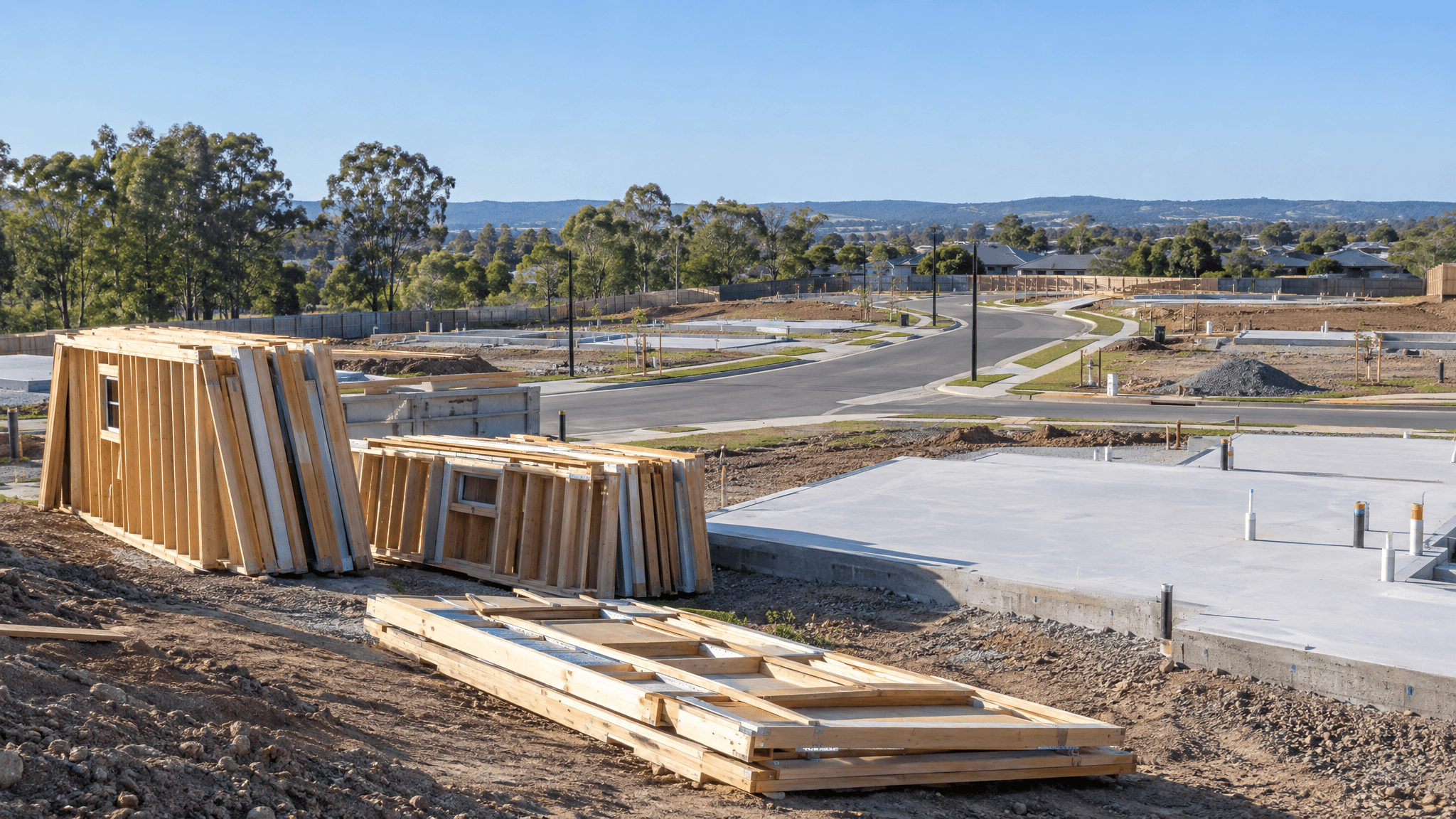
New home sales fall 17.5% as detached-building pipeline weakens
Detached new-home sales fell across every mainland state surveyed by the HIA in the September quarter, raising the risk that the recent improvement in home building will prove short-lived.

RentBuy Team
4 min read
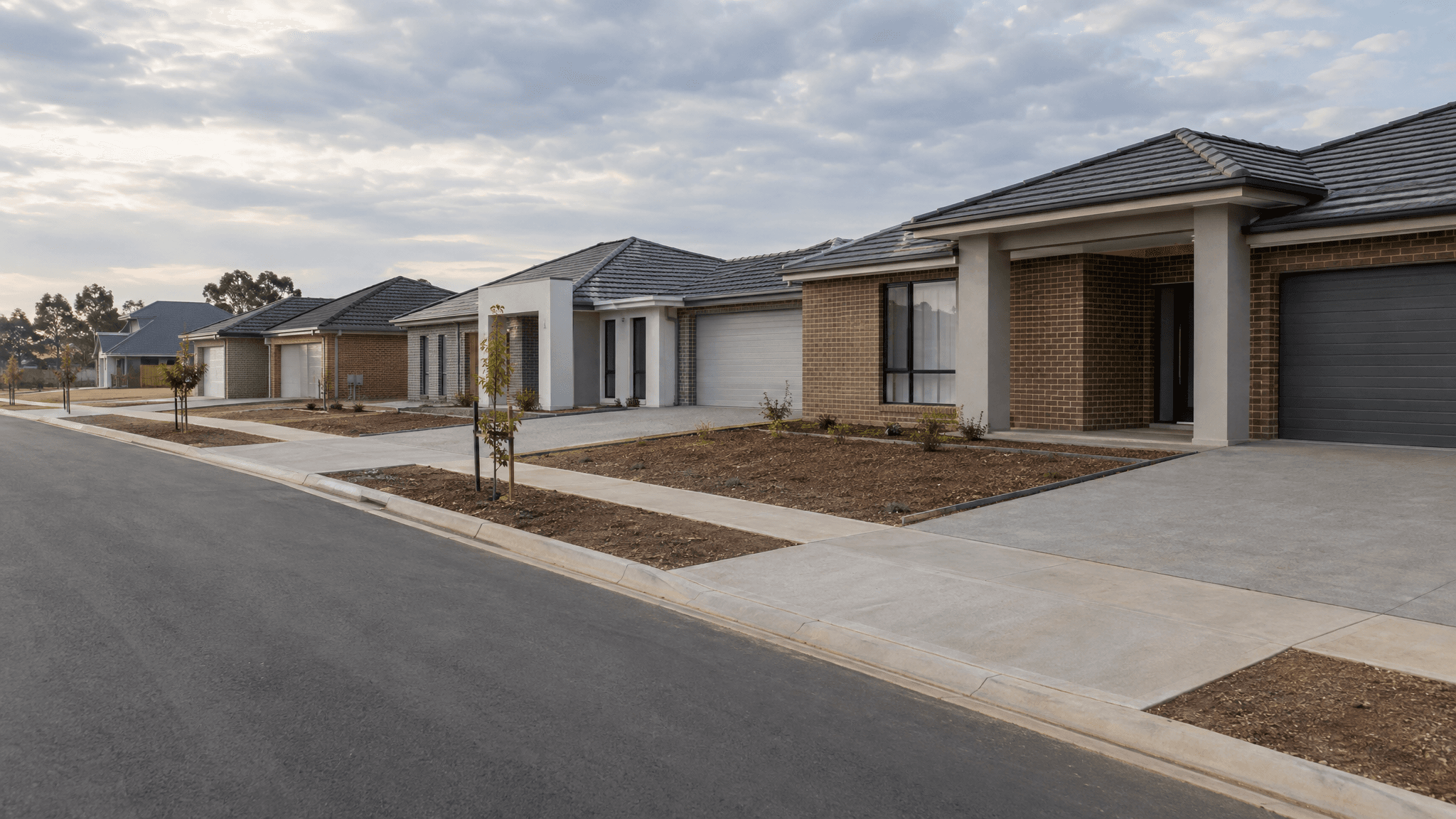
Sales of new detached homes fell 17.5 per cent in the September quarter, returning to their lowest quarterly level in 18 months and threatening the next stage of Australia’s housing construction pipeline.
The Housing Industry Association’s New Home Sales report, published on Friday, found that sales were 16.4 per cent lower than a year earlier. The report surveys major volume home builders in New South Wales, Victoria, Queensland, South Australia and Western Australia and is used as an early indicator of future detached-house construction.
September provided a small monthly improvement, with sales rising 3.4 per cent. HIA chief economist Tim Reardon cautioned against treating that result as the beginning of a recovery, pointing to weak visits, enquiries, leads and conversions reported by builders.
Every surveyed state recorded a fall
Quarterly sales declined in all five states covered by the report, although the scale varied considerably:
- Queensland fell 26.3 per cent
- Victoria fell 23.3 per cent
- New South Wales fell 17.4 per cent
- South Australia fell 7.6 per cent
- Western Australia fell 1.7 per cent.
The broad decline matters because a new-home sale occurs well before construction is completed. Buyers generally need to select land and a builder, finalise the contract and finance, obtain approvals and wait for work to start. A downturn in sales can therefore take months to appear in official commencement and completion figures.
That lag helps explain why current construction data can improve even while sales weaken. HIA said stronger sales during late 2025 and early 2026 created work that is only now appearing in approvals and commencements.
For renters and established-home buyers, the risk is that a shrinking future pipeline limits the number of new dwellings entering the market after the current backlog has been completed.
Finance pressure is reaching signed customers
The cancellation rate rose to 13.6 per cent in September, according to HIA, after sitting below 10 per cent early in the year.
A new-build contract can be particularly sensitive to changes in lending capacity. Finance may initially be conditional, while the customer’s final loan requirements, valuation, land settlement and building costs can evolve before construction starts.
Higher interest rates can reduce the amount a household is permitted to borrow even when its income has not changed. Buyers may also pull back if the cost of their proposed new home is rising while established-property prices are falling, making an existing dwelling look comparatively better value.
The figures do not mean every cancelled contract represents a failed project. Some households may change builders, redesign the home or postpone construction. But a sustained rise in cancellations adds another warning that the forward workload is weaker than headline construction numbers suggest.
Supply targets face a demand-side problem
HIA said construction commenced on 204,500 homes in 2025–26, below the average of 240,000 homes a year associated with the National Housing Accord target.
The association argues that interest rates, taxes, regulation and high construction costs are making new development more difficult to justify. While HIA is an industry body advocating for home builders, its sales survey provides a direct reading of customer activity among large operators.
The result highlights a central difficulty in expanding housing supply: governments can rezone land and streamline approvals, but projects still need buyers who can obtain finance and afford the completed product.
Falling established-home prices can help some purchasers, yet they also place pressure on new housing because builders cannot reduce land, labour and material costs as quickly as resale prices can move. If the gap becomes too wide, households may choose an established home or remain where they are.
For developers and land sellers, weaker house sales may translate into slower lot absorption, more incentives or delayed stages. For buyers who remain finance-ready, that can create room to negotiate, but discounts should be considered alongside site costs, contract allowances, completion risk and the financial strength of the builder.
What it means for you
- New-home buyers may gain negotiating power, but should compare the full completed cost rather than the advertised base price.
- Confirm finance close to contract signing and understand any conditions that could affect approval later.
- Check provisional sums, site costs, escalation clauses and cancellation terms before committing.
- A weaker sales pipeline could reduce future housing completions even while current construction remains busy.