Governments agree to simplify the construction code and support modular building
Commonwealth, state and territory ministers have agreed on directions for a simpler, more consistent National Construction Code, alongside support for modular building and infrastructure intended to unlock up to 65,000 homes.

RentBuy Team
4 min read
Australia’s housing, planning and building ministers have agreed to pursue a major overhaul of the National Construction Code, with the stated aim of making homes easier and less costly to deliver without lowering safety or quality standards.
The agreement emerged from Friday’s Joint Ministerial Meeting on Housing Supply and Affordability in Canberra. The Commonwealth, states and territories committed to improving the code’s clarity, digital delivery and national consistency, while creating better pathways for modular and prefabricated construction.
The announcement sets a direction rather than immediately changing the rules applying to a house or apartment project. Detailed amendments, consultation processes and implementation dates will still be needed before builders, developers or home owners see a practical difference.
What governments agreed to pursue
The National Construction Code establishes minimum technical requirements for matters including building safety, health, accessibility, amenity and sustainability. The Australian Building Codes Board maintains it on behalf of Australia’s governments, while individual jurisdictions can apply variations.
Friday’s Treasury communiqué said governments would work towards a genuinely national code and examine where jurisdictional variations create inconsistencies. Proposed work includes:
- delivering the NCC 2025 materials digitally and preparing them for emerging digital tools
- testing tools that could help users navigate and apply code provisions
- rewriting or reorganising material to improve readability
- removing duplicated, outdated or inconsistent content
- developing simpler solution manuals
- using more transparent cost-benefit analysis when considering changes
- tailoring compliance requirements to the type and complexity of a building.
The communiqué also calls for policy direction to be set by ministers, with technical decisions made through the Australian Building Codes Board and informed by regulators, jurisdictions and industry.
For builders, the potentially important element is not simply reducing the number of pages in the code. A clearer national system could reduce the time and professional expense involved in interpreting requirements, documenting compliance and adjusting products or designs for different states.
However, reviewing variations does not guarantee they will disappear. Some differences reflect local conditions such as climate, cyclones, bushfire exposure and established state regulation. The benefit will depend on whether governments can distinguish necessary local provisions from avoidable duplication.
A clearer path for modern construction
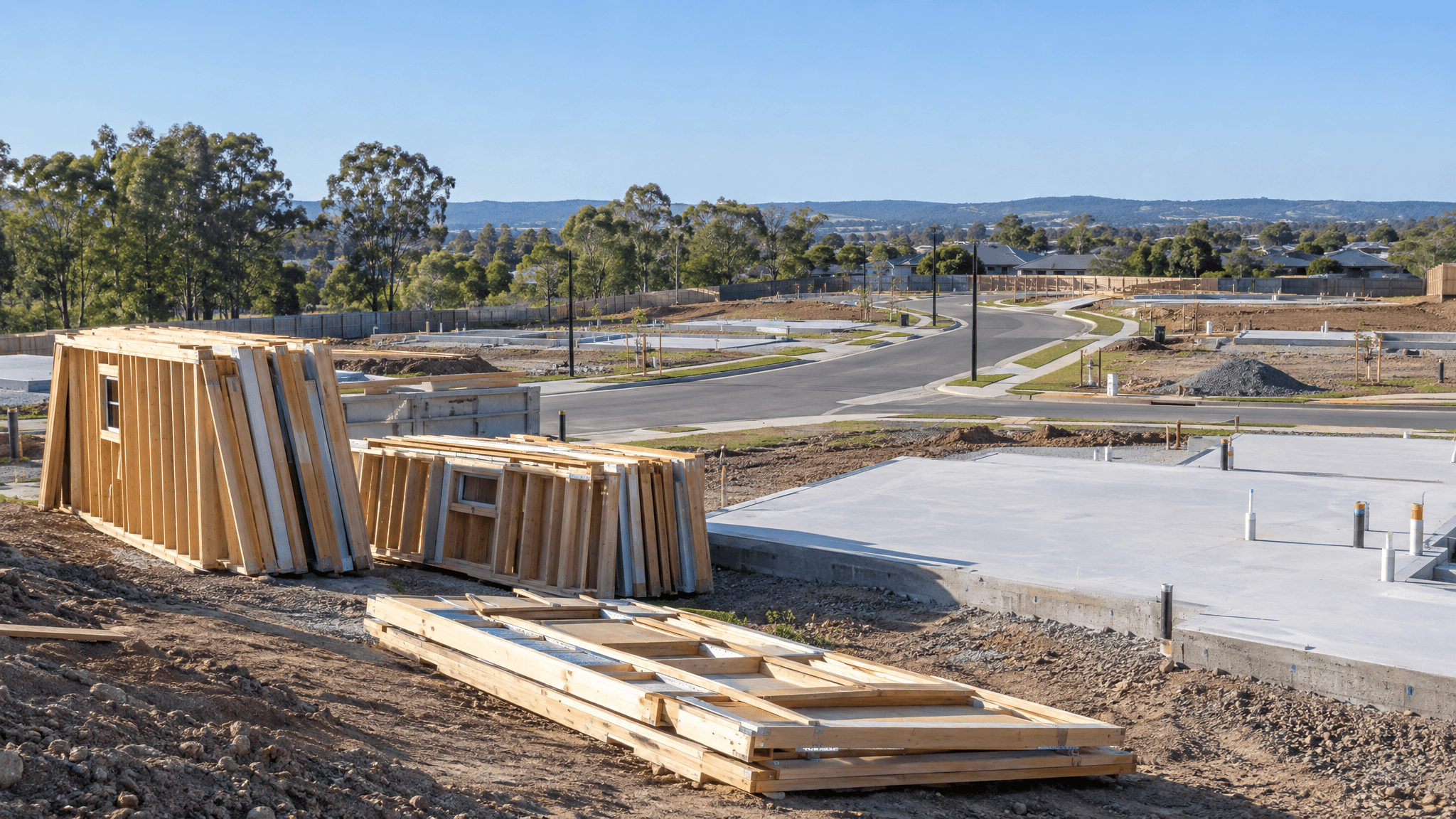
Governments also agreed to develop nationally consistent and scalable pathways for safe, innovative products and construction methods, including modular and prefabricated housing.
Factory-built components can shorten time on site and make production more repeatable, but suppliers and developers may face uncertainty over product approval, certification and acceptance across jurisdictions. A common pathway could make it easier for manufacturers to serve several states rather than navigating substantially different processes for each market.
The commitment does not mean every modular system will be automatically approved. Products and completed buildings will still need to meet technical, safety and performance requirements. The objective is to make the route for demonstrating compliance clearer and proportionate to risk.
The Productivity Commission’s July interim report on housing supply regulation provides context for the decision. It found that complex regulation, poor coordination and slow approvals can delay housing or make projects unviable, while stressing that regulation remains essential for safe, durable homes.
Infrastructure remains part of the supply problem
Ministers also highlighted the Australian Government’s $2 billion Local Infrastructure Fund. Treasury said it is intended to support enabling works and unlock up to 65,000 homes over the coming decade.
Roads, water, sewerage and other local infrastructure can determine whether rezoned land is genuinely ready for housing. Funding announcements therefore need to be judged by which projects are chosen, how quickly construction occurs and whether the associated homes remain commercially feasible.
The meeting noted that dwelling completions rose 15.9 per cent over the year to the June quarter of 2026, while a record 248,733 homes were under construction. That shows a large current workload, but Friday’s separate new-home sales figures suggest maintaining the pipeline will be difficult if demand for new detached homes continues to weaken.
What it means for you
- Buyers should not expect immediate changes to building standards, prices or project timeframes.
- People planning a new build should continue using the code and state requirements currently in force.
- Builders and manufacturers should watch for Australian Building Codes Board consultations and implementation details.
- Any long-term affordability benefit will depend on governments converting the agreement into consistent rules and faster delivery.