Housing approvals lag estimated demand by 88,809 homes, suburb analysis finds
A new suburb-level analysis identifies an estimated national housing approval gap, but approvals, population growth and completed supply need to be read carefully.

RentBuy Team
4 min read
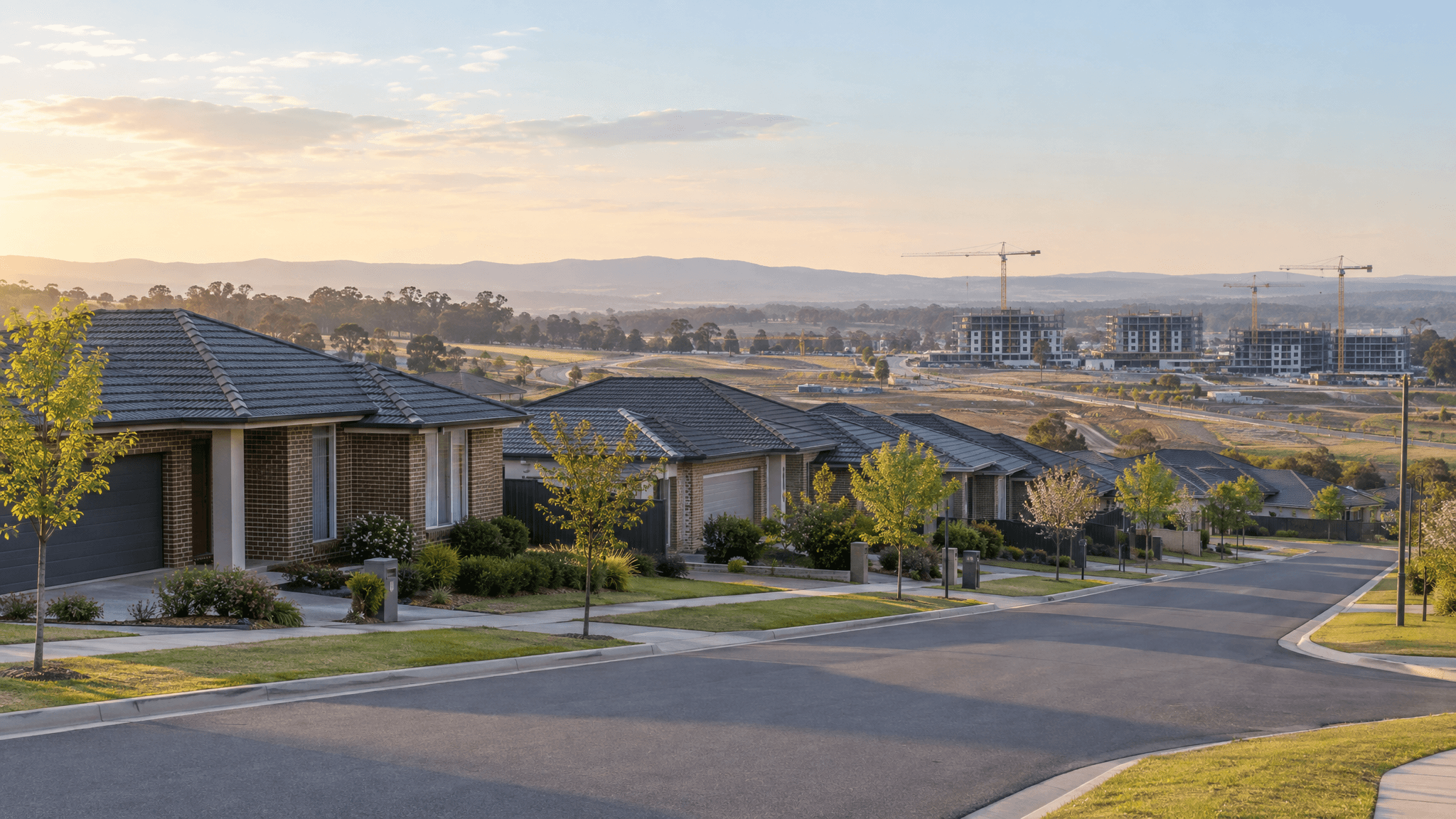
A new analysis has identified a wide gap between estimated housing demand and dwelling approvals in some of Australia’s fastest-growing neighbourhoods, highlighting where local supply may be struggling to keep pace with population change.
Research commissioned by Bolst Property Group and reported by realestate.com.au estimates that Australia recorded an approval shortfall of 88,809 homes over the three-year period examined. The work used Australian Bureau of Statistics population and building approval data at Statistical Area Level 2, or SA2, which can represent one suburb, part of a suburb or several adjoining communities.
The largest estimated gap was in Collingwood in inner Melbourne. The analysis calculated demand for 818 additional dwellings from population growth between 2022 and 2025, compared with 40 approvals across the approval period used in the study. That produced an estimated gap of 778 homes.
Claremont in Perth was next, with estimated demand for 588 dwellings and 16 approvals, leaving a gap of 572. Hurstville-Central in southern Sydney ranked third when the shortfall was measured against estimated demand.
The shortage is highly localised
The results suggest that broad state or city totals can hide substantial differences between neighbourhoods.
Across Sydney, the analysis estimated that population growth created demand for roughly 121,000 dwellings while just under 97,000 were approved, leaving a gap of about 24,000. Hurstville-Central, Kogarah and Rockdale-Banksia were among the areas identified as falling behind.
Queensland recorded the largest state-level gap in the published findings. About 107,294 homes were approved from July 2022 to June 2025 against estimated demand for 140,153, producing a shortfall of 32,859. The research classified 222 of the state’s 553 assessed areas as having an approval gap.
The picture was not uniformly negative. Regional areas collectively ran about 20,000 approvals ahead of the modelled demand, and the wider Geelong area recorded approximately 10,450 approvals against estimated demand for 7,990 dwellings. Individual Geelong neighbourhoods, however, still fell short.
This distinction matters for buyers and renters. A city can have a healthy pipeline overall while established suburbs near jobs, transport and schools remain undersupplied. Conversely, a large number of approvals in an outer growth corridor does not necessarily help households seeking smaller homes in an inner or middle-ring location.
What the figures do not show
An approval is permission to build, not a completed home. Projects can be delayed, redesigned or abandoned because of construction costs, finance, presales, infrastructure constraints or changing market conditions.
The analysis also compares population change and approvals across slightly different periods and converts new residents into estimated dwelling demand. Household sizes, vacant dwellings, demolitions and movement within an area can all affect the result.
For those reasons, an approval gap should not be treated as a prediction that prices or rents will rise by a particular amount. It is better understood as a signal for further investigation into whether zoning, infrastructure, project feasibility or construction capacity is limiting supply.
The findings nevertheless reinforce an important point: headline housing targets must eventually translate into suitable completed homes in the places where people want or need to live.
What it means for you
- Buyers should examine the active and proposed supply pipeline in a specific suburb rather than relying on citywide construction figures.
- Renters in identified gaps may continue to face competition even when the broader market is cooling.
- Sellers should not assume an estimated shortage guarantees price growth, particularly while borrowing capacity and buyer demand are weakening.
- New-build buyers should distinguish between approved, under-construction and completed projects when assessing future supply.