
Buying beats renting in some suburbs, but ownership costs can reverse the maths
Falling unit values and high rents have made estimated mortgage repayments cheaper in parts of Melbourne and Darwin. Buyers still need to account for strata fees, rates, insurance, maintenance and the risks of a small deposit.

RentBuy Team
4 min read
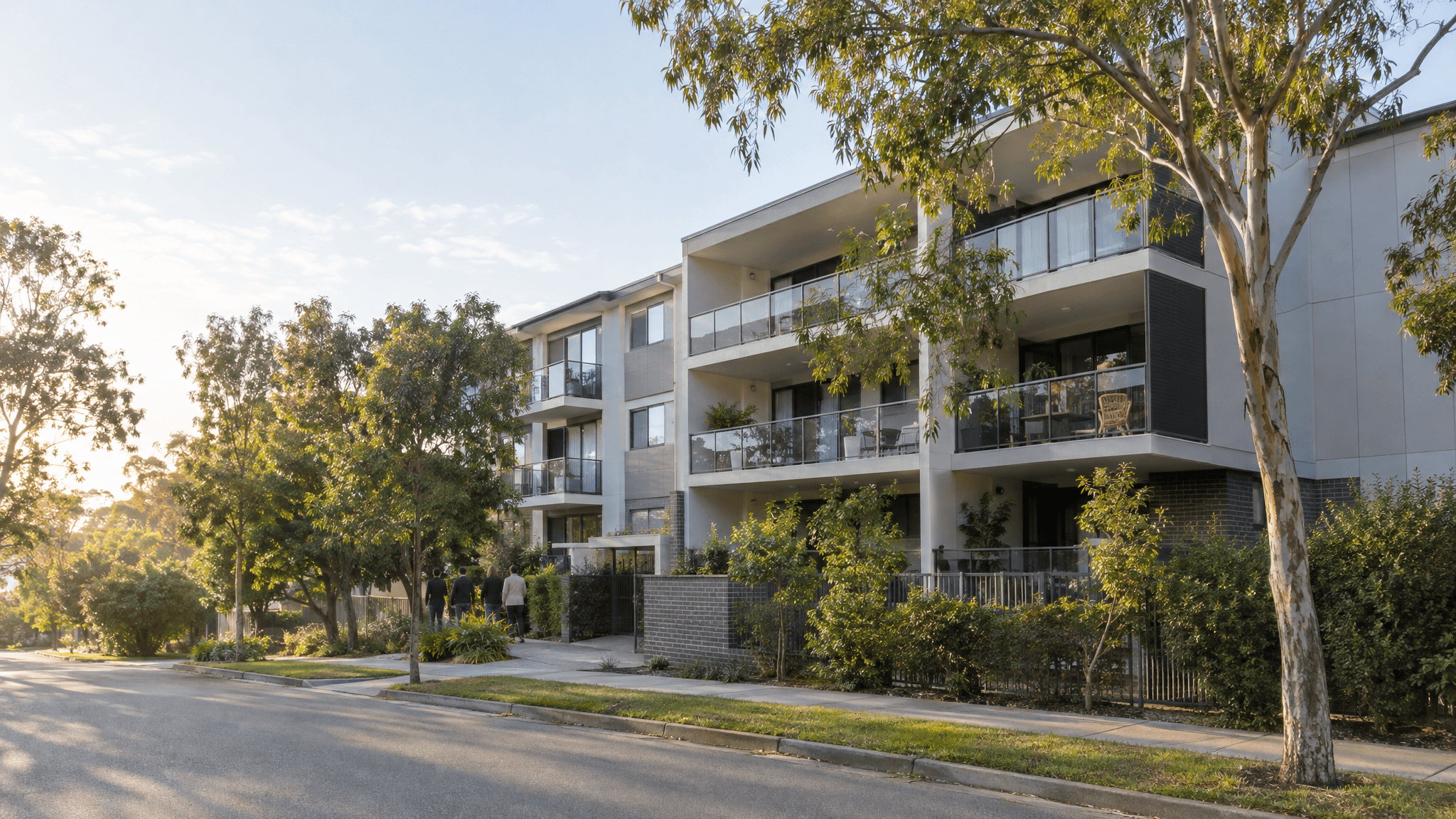
High rents and falling property values have narrowed the weekly cost gap between renting and buying in parts of Australia, with estimated mortgage repayments now lower than rent in a small number of suburbs.
Guardian Australia’s analysis of Cotality data found the crossover was most visible in apartment-heavy parts of inner Melbourne and in Darwin. Repayments were also within striking distance of rents in selected Canberra and Sydney suburbs, although buying remained more expensive across most of the country.
The finding does not mean home ownership has suddenly become cheaper everywhere. It shows that renters who are financially ready to buy may find the weekly repayment comparison has changed in particular unit markets.
Where the gap has narrowed
The analysis calculated repayments on a new 30-year loan covering 95 per cent of a property’s median value, using a 6.2 per cent interest rate. It compared that figure with the median weekly rent for the same area.
On those assumptions, repayments for a typical property were lower than rent in Melbourne suburbs including Carlton, Melbourne CBD, Notting Hill, Travancore and Southbank.
In Darwin, buying was calculated to be cheaper in about one-quarter of suburbs. Cotality researcher Gerard Burg told Guardian Australia that many of those locations were influenced by mining and resource-sector demand, where temporary workers may rent rather than make a long-term purchase.
Sydney did not produce the same broad crossover. However, estimated repayments were within $100 a week of rents in Ultimo, Warwick Farm, Rosehill, Liverpool and Granville. In the Canberra suburbs of Belconnen and Phillip, the gap was below $75 a week, with more areas joining the list when apartments were examined separately.
Nationally, one in 10 suburbs and towns had an estimated repayment less than $200 a week above the median rent.
Apartments are driving the shift
The areas where buying compares most favourably tend to contain large numbers of apartments. Additional apartment supply can hold down sale prices while a tight rental market continues to support rents.
Melbourne provides a clear example. The city’s median apartment value had fallen by almost $25,000 over the year covered by the analysis, while typical apartment rents increased. This combination narrowed the gap even though mortgage interest rates were higher.
Cotality’s September-quarter Rental Review put the national median dwelling rent at $713 a week, up 5.5 per cent over the year. Quarterly rental growth had slowed, but rents remained substantially higher than five years earlier.
The calculation may therefore be worth revisiting for renters who dismissed buying one or two years ago. A softer sale price, rising rent and a suitable low-deposit loan can produce a different result even without a reduction in interest rates.
A mortgage repayment is not the total cost
The comparison excludes several expenses that fall on owners rather than tenants. Apartment buyers may face strata levies, special levies and building repairs, while all owners need to allow for council rates, insurance and maintenance.
Upfront costs can include conveyancing, inspections, loan fees, moving expenses and transfer duty where no concession applies. A buyer using a 5 per cent deposit also begins with little equity, increasing their exposure if the property’s value falls after settlement.
Borrowing capacity is another hurdle. A repayment may look manageable beside the rent, but a lender will test the applicant’s income, expenses, debts and capacity to cope with higher rates. Buyers also need enough savings for the deposit and purchase costs.
Before treating a suburb as cheaper to buy, compare:
- The likely mortgage repayment under several interest-rate scenarios.
- Strata records, regular levies and any proposed special levies.
- Council rates, insurance and an annual maintenance allowance.
- The deposit and all costs required before settlement.
- Whether the dwelling will remain suitable for at least several years.
What it means for you
- Renters considering an apartment should rerun their numbers using current local prices and rents.
- A lower mortgage repayment does not automatically mean a lower total housing cost.
- Inner-city unit markets may offer opportunities, but building quality and strata finances require careful checking.
- Buyers using a small deposit should keep an emergency buffer for rate rises and unexpected property costs.