Wollongong disability housing project collapses after raising more than $10m
Nothing was built after 60 investors funded a specialist disability housing project. The case highlights the risks of treating NDIS-linked property investments as government-backed.

RentBuy Team
4 min read
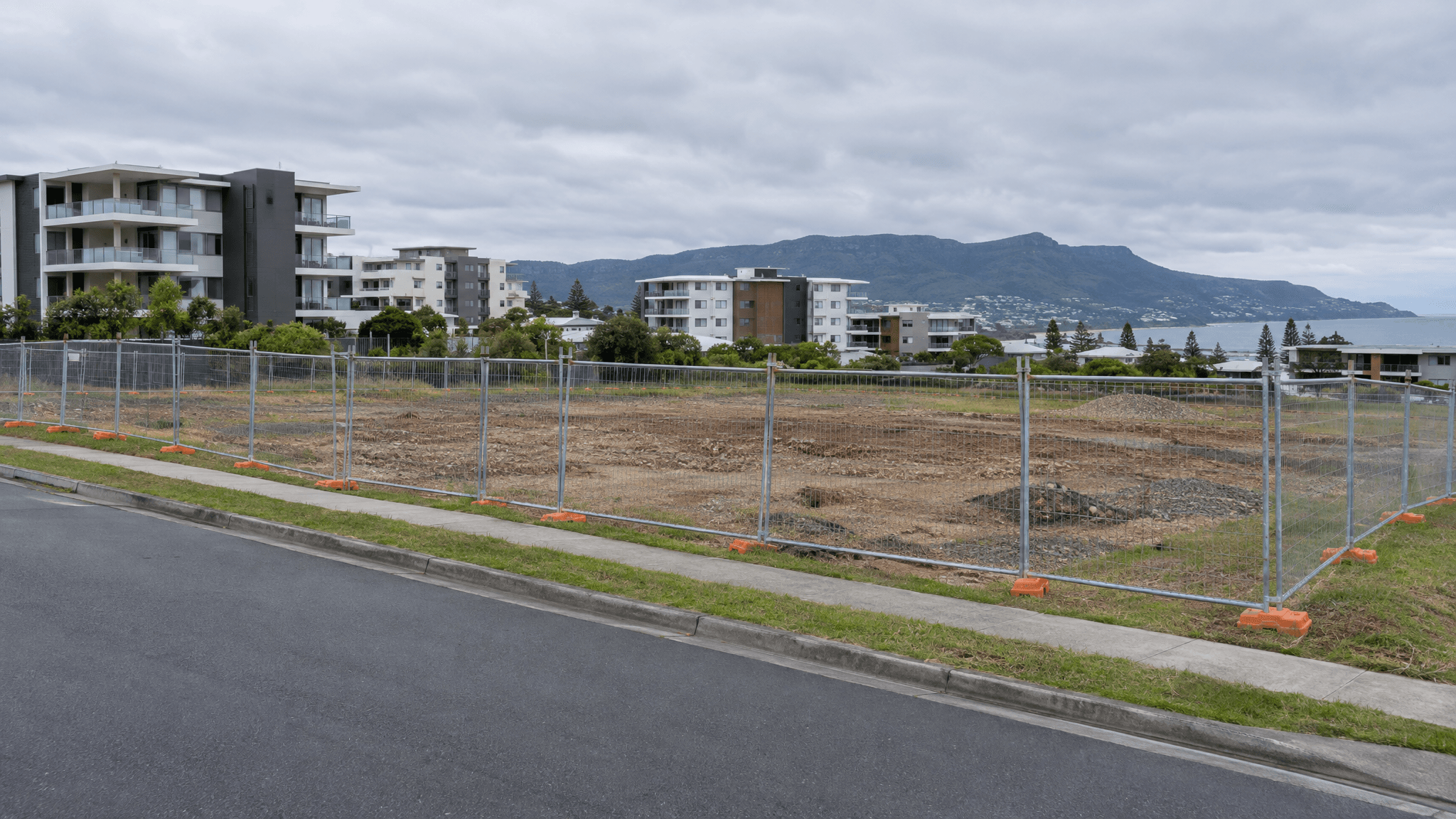
A proposed Wollongong housing development for people with disabilities has collapsed after raising more than $10 million from investors, leaving the site vacant and liquidators examining millions of dollars in cash withdrawals.
ABC News reported on Sunday that Fairy Meadow House Pty Ltd attracted money from 60 investors but never built the planned specialist disability accommodation. The company entered liquidation in May, while its director, Shaun Mowbray, was declared bankrupt in July.
According to the ABC, liquidators identified more than 10 withdrawals totalling over $5.28 million from the company’s accounts before its failure. They said they had been unable to verify the transactions as legitimate and intended to report potential breaches to the Australian Securities and Investments Commission.
Mr Mowbray reportedly told the liquidators that the money was used to buy building materials from Thailand, but the ABC said supporting documents were not provided. Mr Mowbray did not respond to the broadcaster’s requests for comment.
The findings are allegations arising from the liquidation process. They have not been tested in court, and the report does not establish criminal liability.
The development remained vacant
Fairy Meadow House was promoted as a specialist disability accommodation, or SDA, project. SDA is purpose-built housing for eligible NDIS participants with extreme functional impairment or very high support needs.
Investment documents cited by the ABC offered an annual return of 10 per cent. Investors supplied lump sums and were to receive monthly interest while the property was developed, followed by repayment of their initial capital at the end of a fixed term.
The ABC reported that investors were told they would own the Fairy Meadow land outright. However, two mortgages were subsequently placed over the property. The vacant site has now been sold, with the proceeds expected to repay lenders ahead of investors.
That distinction matters because a property’s underlying land may provide little protection if a lender holds a registered mortgage and the project company has other debts. An investor’s position depends on the legal structure, security documents and repayment priority — not simply on whether money is associated with a physical development.
NDIS funding is not an investment guarantee
The National Disability Insurance Agency says neither it nor the Australian Government guarantees, backs or assures returns from SDA investments. It also does not build, own, commission or lease SDA properties.
Government SDA payments relate to eligible participants occupying properly enrolled dwellings. A proposed project cannot generate that income merely because it is designed or advertised as disability accommodation. The dwelling must be completed, satisfy design and enrolment requirements, and house an eligible participant with an agreement in place.
The agency warns that claims of guaranteed occupancy, government-backed income or recession-proof returns may be false or misleading. It also identifies vacancy, local demand, dwelling design, location, provider quality and contractual terms as risks investors should assess.
For prospective investors, the Fairy Meadow failure shows why the developer, the investment vehicle and the NDIS payment system must be assessed separately. An SDA project can have a socially valuable purpose without its financing being low-risk.
Checks should include who owns the land, whether mortgages or other charges are registered, what security the investor receives, when construction funds can be withdrawn, whether money is held in a controlled account and what happens if the project is delayed or abandoned.
Independent legal and financial advice is particularly important where returns are well above ordinary residential yields or where promotional material creates an impression of government protection.
What it means for you
- An NDIS connection does not make a property investment government-backed or guarantee rent, occupancy or returns.
- Confirm land ownership, registered mortgages and your repayment priority before transferring money.
- Treat high fixed returns and interest paid before construction as reasons for deeper scrutiny, not proof that a project is performing.
- Use advisers who are independent of the developer, promoter and investment vehicle.