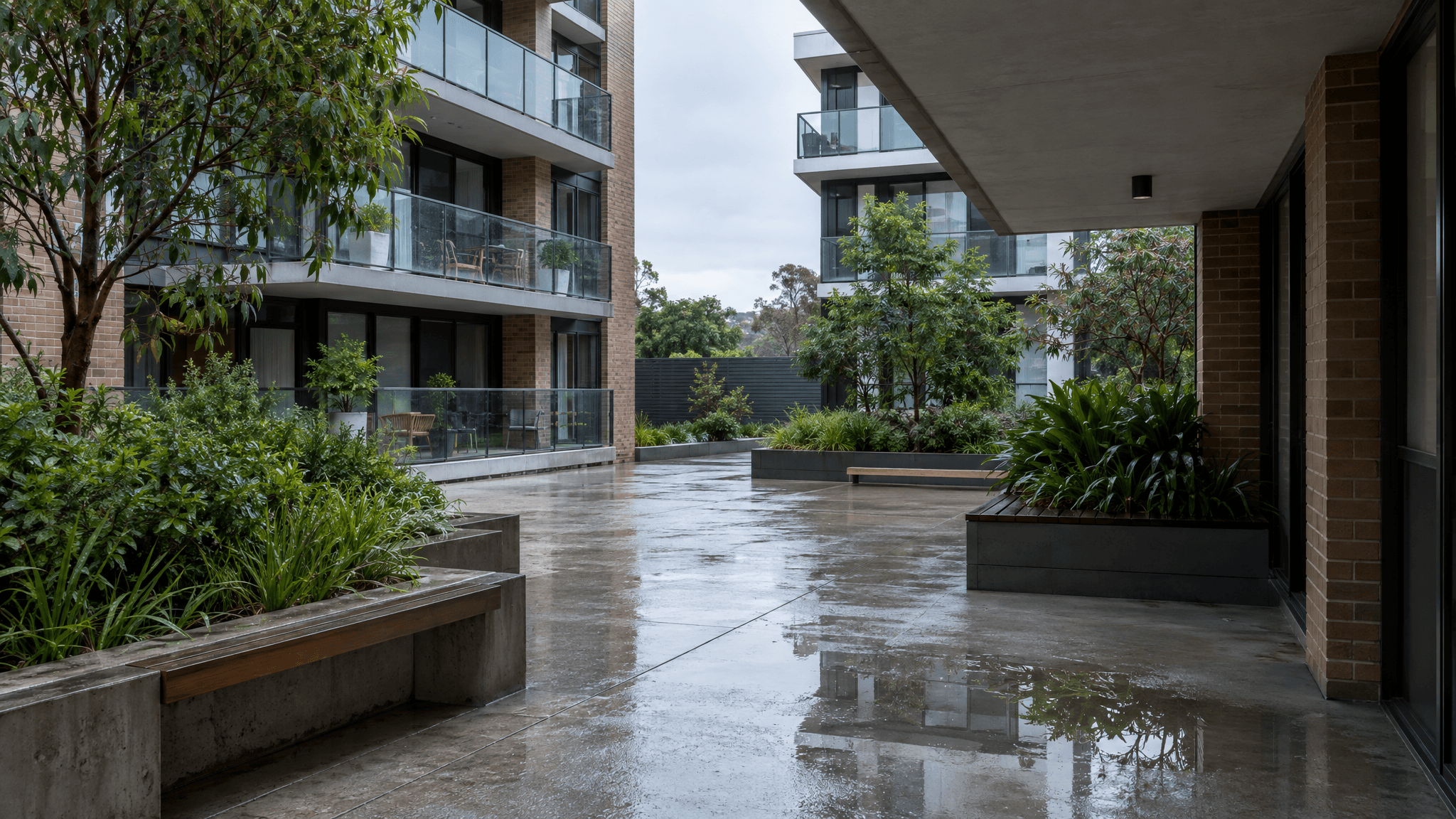
Queensland home loan income hurdle rises far faster than wages
New analysis estimates a typical Queensland buyer needs an annual income of about $177,554 to satisfy a standard lender assessment.

RentBuy Team
4 min read
The income estimated to qualify for a typical Queensland home loan has risen by more than $30,000 in a year, showing why falling property prices do not automatically make homes easier to buy when interest rates are climbing.
Canstar analysis reported by realestate.com.au on Sunday estimated that a buyer now needs an annual income of $177,554 to satisfy lenders for a standard Queensland house purchase. The required income rose by an average of $30,258 over the financial year, compared with reported growth of about $3,600 in the earnings benchmark used in the analysis.
The calculation assumed a 20% deposit, a 3 percentage point serviceability buffer and an average new-loan interest rate of 6.49%, up from 5.50% in 2025.
Those assumptions matter. The figure is not a universal minimum income and it does not mean every Queensland applicant earning less will be rejected. Lenders assess debts, dependants, living costs, credit limits and the proposed loan term, while couples can combine their incomes.
It nevertheless demonstrates the effect of higher rates on borrowing capacity. A cheaper property can remain out of reach when the bank tests repayments at a substantially higher rate than the borrower will initially pay.
The statewide gap
The realestate.com.au report compared Canstar’s $177,554 statewide borrowing benchmark with typical full-time earnings of $103,714, producing a gap of $73,840.
Separately, the Australian Bureau of Statistics’ May 2026 earnings release put Queensland’s average weekly ordinary-time earnings for a full-time adult at $2,039.70. Average earnings are a broad labour-market measure, however, and should not be read as the income of every prospective buyer or household.
Greater Brisbane’s estimated qualifying income increased by about $23,000 to $164,438 for houses and units combined, where the analysis used a median value of $1.03 million.
The required combined household income for a typical Chermside house was estimated at $227,140, an increase of more than $31,000. In Springfield Lakes, the estimated income needed for a $970,000 house rose by $30,430 to $155,183.
The pressure extended to apartments. Canstar’s modelling put the qualifying income for a typical Paddington unit at $168,406, more than $43,000 higher than a year earlier. In Harristown, Toowoomba, the estimated income needed for an apartment increased 57.4% to $106,882.
These figures are scenarios rather than promises about what a bank will lend. They are most useful for showing the direction and scale of the serviceability change under consistent assumptions.
Why lower prices may not restore capacity
Queensland buyers are confronting two moving parts: the property price and the cost of servicing the debt. Recent price falls can reduce the loan required, but higher mortgage rates increase the monthly repayment and the rate at which banks assess the application.
For example, a buyer who has saved a sufficient deposit may still find that their maximum approved loan has fallen since they started searching. Pre-approval is generally time-limited and can be reassessed if interest rates, income, expenses or credit commitments change.
This makes advertised borrowing calculators a starting point rather than a purchasing budget. Buyers should also allow for stamp duty where applicable, conveyancing, inspections, moving expenses, strata costs and an emergency buffer after settlement.
There are practical ways to improve an application, although none guarantees approval:
- Reduce unused credit card limits, personal loans and buy-now-pay-later commitments.
- Update a broker or lender when income or regular expenses change.
- Compare a smaller dwelling, a different suburb or a lower price bracket.
- Obtain a fresh assessment before making an unconditional offer.
For sellers, reduced borrowing capacity can shrink the pool of qualified buyers even when inspection numbers appear healthy. Properties priced near common loan limits may be particularly sensitive to changes in bank assessments.
What it means for you
- Buyers should have borrowing capacity checked again if their approval predates the latest rate increase.
- A 20% deposit does not ensure approval; income and ongoing commitments can be the binding constraint.
- Unit buyers need to include strata levies and potential special levies in their affordability assessment.
- Sellers may need to adjust price expectations when otherwise interested buyers cannot obtain enough finance.