North Ellenbrook rezoning moves 759 hectares into Perth’s urban growth pipeline
A major Perth growth area has moved from urban-deferred to urban zoning, advancing land planned for thousands of homes while leaving infrastructure and subdivision work still to come.

RentBuy Team
4 min read
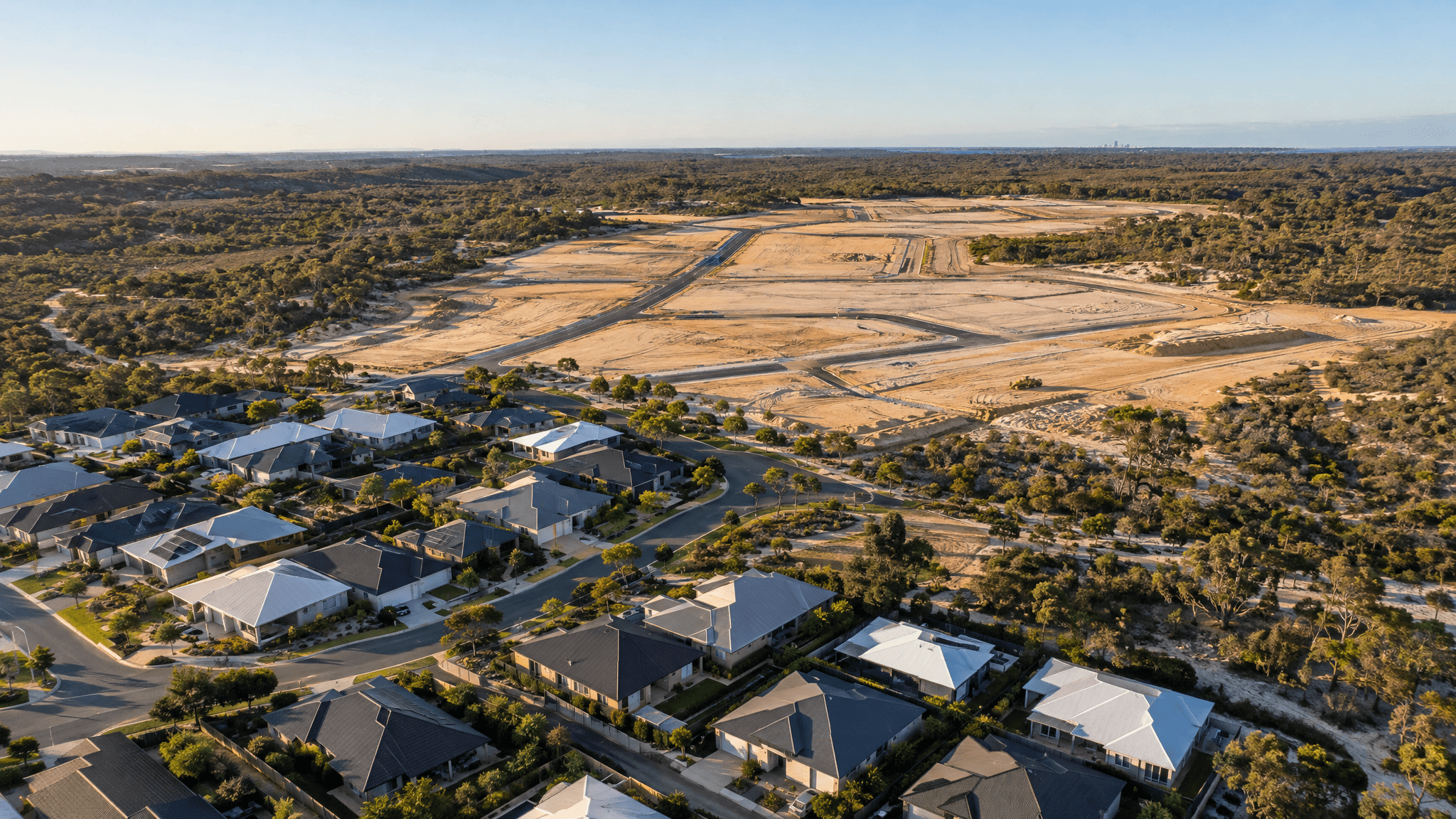
More than 759 hectares at North Ellenbrook has received urban zoning, advancing one of Perth’s major long-term housing growth areas beyond the holding status that previously applied to the land.
A notice published by the Western Australian Planning Commission on Friday transferred 325 hectares in North Ellenbrook West and 434.28 hectares in North Ellenbrook East from the Metropolitan Region Scheme’s Urban Deferred zone to the Urban zone.
The same land was concurrently transferred into the Residential Development zone under the City of Swan’s local planning scheme. The changes took effect on 9 October when the notice appeared in the WA Government Gazette.
The decision is important because an Urban Deferred classification identifies land that may eventually support urban development but cannot yet proceed as ordinary urban land. Moving it into the Urban zone removes that regional planning hold and permits more detailed development processes to advance.
It does not mean builders can immediately begin constructing houses across the 759.28 hectares.
Part of a much larger housing area
North Ellenbrook sits beyond the established Ellenbrook community in Perth’s north-east corridor. The Western Australian Planning Commission has already approved district structure plans for eastern and western parts of the area.
Those plans establish the broad location of housing, roads, schools, activity centres, open space, drainage and environmental reserves. Earlier WA Government material described the two planning areas as a long-term extension capable of accommodating up to about 30,000 residents.
The approved North Ellenbrook East structure plan alone is intended to guide approximately 5,500 dwellings, according to Department of Planning information. The western plan has also been expanded and is expected to support thousands of additional homes over a lengthy delivery period.
Friday’s rezoning covers substantial portions of both planning areas, but a regional zoning change is only one step in converting broadacre land into saleable residential lots.
What still has to happen
Landowners and developers generally still need more detailed local structure planning, subdivision approval and servicing arrangements before individual lots can be created. Environmental conditions, drainage, roads, utilities and community infrastructure also have to be resolved as development moves through successive stages.
This distinction matters for buyers. Large rezoning announcements can add significant future capacity without producing homes in the following year. The timing of new supply depends on whether water, electricity, sewerage and transport infrastructure can be delivered when each precinct is ready.
The WA Government’s 2026–27 budget includes housing-enabling infrastructure investment relevant to North Ellenbrook. Budget papers provide for new electricity distribution feeders and planning, land acquisition and long-lead work associated with a future zone substation in the growth corridor.
A new Tonkin Highway interchange is also planned to serve the area. These projects indicate that government is preparing for substantial growth, but they reinforce that the housing program will be delivered over years rather than as one immediate release.
Why the zoning change matters
Perth’s housing supply challenge is not simply a shortage of land marked for residential use. Growth areas need coordinated utilities, roads, schools and open space before homes can be occupied at scale.
The North Ellenbrook change moves a large area closer to that delivery phase by aligning its regional and local zoning with the approved residential vision. It also gives developers greater certainty when preparing the detailed plans and infrastructure agreements needed for later subdivision applications.
For existing Ellenbrook and Swan residents, the decision points to a much larger future population and greater demand on local transport and services. The structure-planning process is intended to provide new facilities with the housing, but the staging of those facilities will remain an important issue as individual estates progress.
What it means for you
- The rezoning adds to Perth’s medium- and long-term land pipeline, not its stock of finished homes today.
- Buyers should distinguish between urban-zoned land, approved subdivisions and titled lots ready to build on.
- Future North Ellenbrook releases may expand choice for first-home buyers, subject to infrastructure and construction costs.
- Nearby owners should expect continued planning for roads, schools, utilities and environmental management.