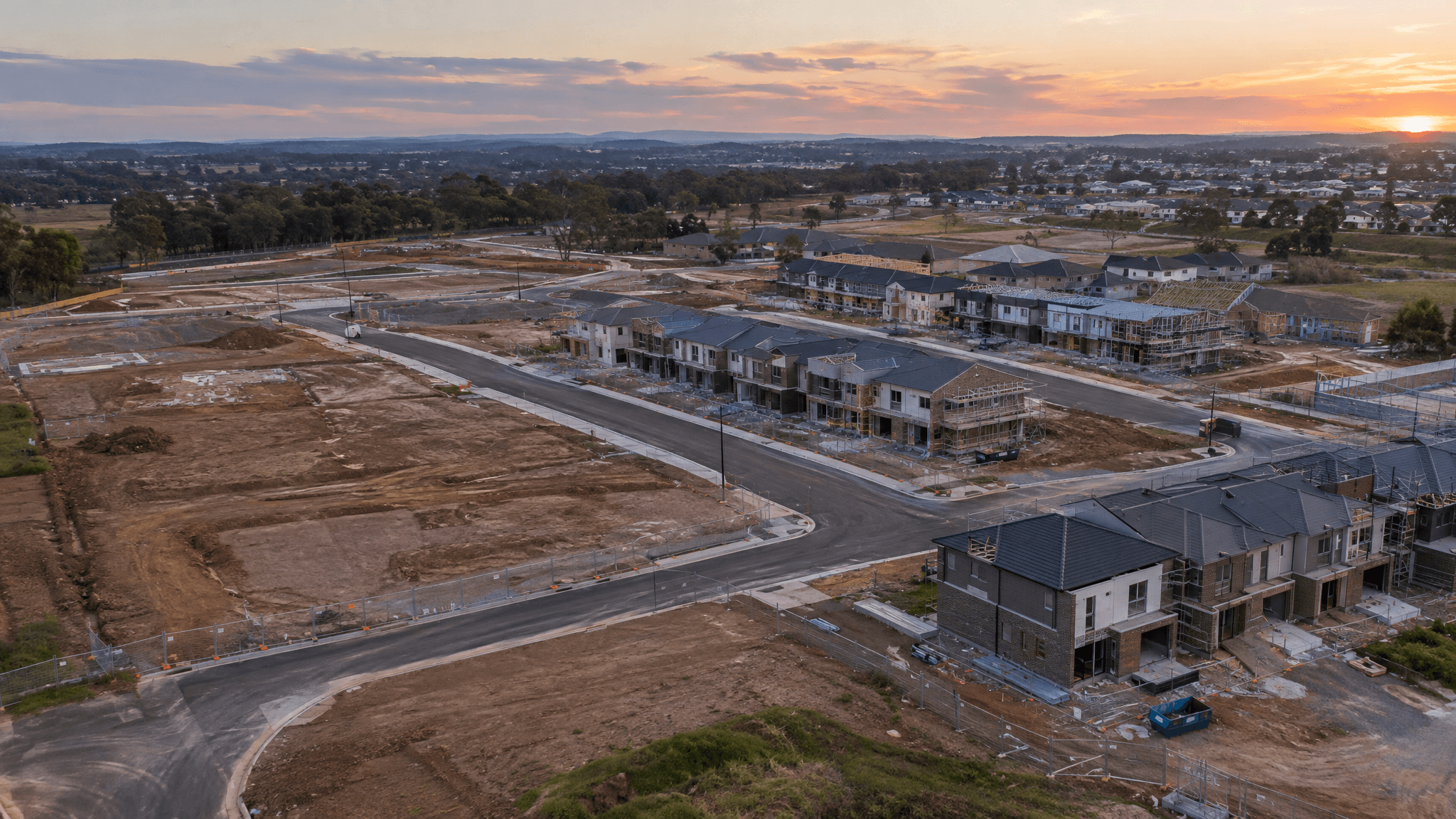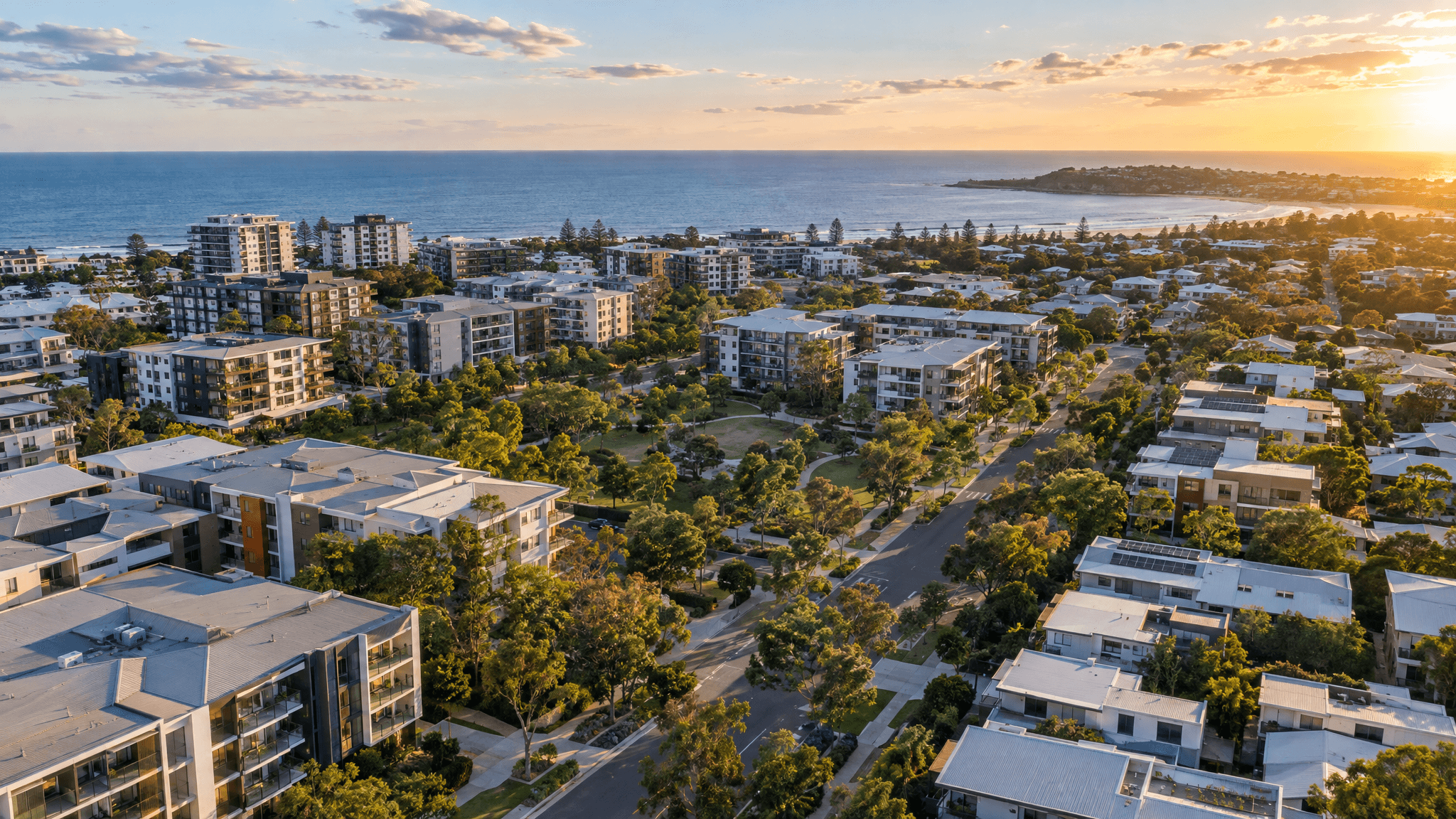
New housing is still being split between well-serviced suburbs and the fringe
New AHURI research finds Australia’s housing strategies often lack the funding, authority and infrastructure coordination needed to put affordable homes near jobs and services.

RentBuy Team
4 min read

Australia’s housing target is not only about how many homes get built. A new national study says where those homes are delivered will determine whether residents gain practical access to jobs, education, transport, services and community facilities.
The Australian Housing and Urban Research Institute report, published on Thursday, examined the delivery of “well-located” homes across capital cities and selected regional centres. It found new housing continues to be divided between established urban areas and fringe suburbs, despite planning policies that commonly promote more compact cities.
The findings matter as governments and industry work towards the National Housing Accord’s target of 1.2 million new, well-located homes over five years from mid-2024. A dwelling may contribute to the numerical target, but it can impose substantial additional costs on its occupants if employment, schools and essential services are difficult to reach.
What makes a home well located
AHURI said government planning documents generally define well-located housing through proximity to employment, education, essential services, green space and infrastructure.
The researchers combined spatial mapping, housing and affordability data, policy reviews and interviews with developers, planning consultants and community housing providers. They also examined links between neighbourhood characteristics and residents’ wellbeing.
Higher neighbourhood amenity was generally associated with better social functioning and general health. However, the report warned that dense concentrations of activity can bring trade-offs, including noise and exposure to crime, unless neighbourhood design and services keep pace with growth.
The mapping showed considerable differences between cities. Sydney directed a substantial share of its new housing into high-amenity areas, while Melbourne’s additions were more concentrated in middle-ranked locations. Geelong and Newcastle performed poorly among the report’s case studies.
The researchers also found signs that Perth, Brisbane, Hobart, Darwin and, to a lesser degree, Adelaide were slowing the delivery of homes in high-amenity locations. That can reflect growth in new suburbs before adequate services and infrastructure have arrived.
Strategies do not guarantee delivery
One of the report’s central findings was that housing strategies frequently lack dedicated implementation funding and legal force.
High-level plans can identify suitable locations and set housing targets, but AHURI found they are rarely embedded clearly enough in statutory planning systems to compel delivery. Responsibility can also be divided among several agencies and levels of government, weakening accountability for roads, public transport, schools and other infrastructure.
The researchers called for clearer definitions of what well-located means in different cities and regions, fewer organisations involved in implementation, firm delivery expectations for particular areas and regular measurement of results.
Infrastructure should also be delivered alongside housing rather than years later. The report highlighted transport and schools but also stressed early provision of parks, recreation facilities, youth centres and other places where communities can gather.
Affordability remains the harder problem
Established suburbs with strong access to jobs and services generally carry higher sale prices and rents, particularly for detached houses. That means increasing density does not automatically produce homes affordable to moderate- or low-income households.
AHURI found units were the most accessible way for a typical renter to live in a well-located area. Even so, project feasibility remains difficult outside locations where buyers can support high sale prices.
Industry participants identified three major barriers: uncertainty about the timing and cost of infrastructure, inconsistent or under-resourced local planning processes, and construction costs that exceed the revenue available from selling moderately priced apartments or townhouses.
The report said governments could help by forward-funding infrastructure, reducing unnecessary approval and compliance costs, improving the speed and transparency of assessments and providing greater policy certainty. It also found that cost reductions alone would not make well-located homes affordable to many low-income renters.
That group will continue to require dedicated social and affordable housing funding in places with access to employment and services.
What it means for you
- Buyers should assess transport, schools and everyday services as carefully as the dwelling itself.
- Lower-priced fringe housing can bring higher travel costs and longer waits for infrastructure.
- Units may offer the most attainable entry into established, well-serviced suburbs.
- Future supply targets should be judged by location and affordability, not dwelling numbers alone.