City of Sydney draft plan points to more growth near transport and renewal sites
A draft implementation plan outlines where the City of Sydney could investigate more homes as it works towards an 18,900-dwelling target and longer-term capacity requirements.

RentBuy Team
4 min read
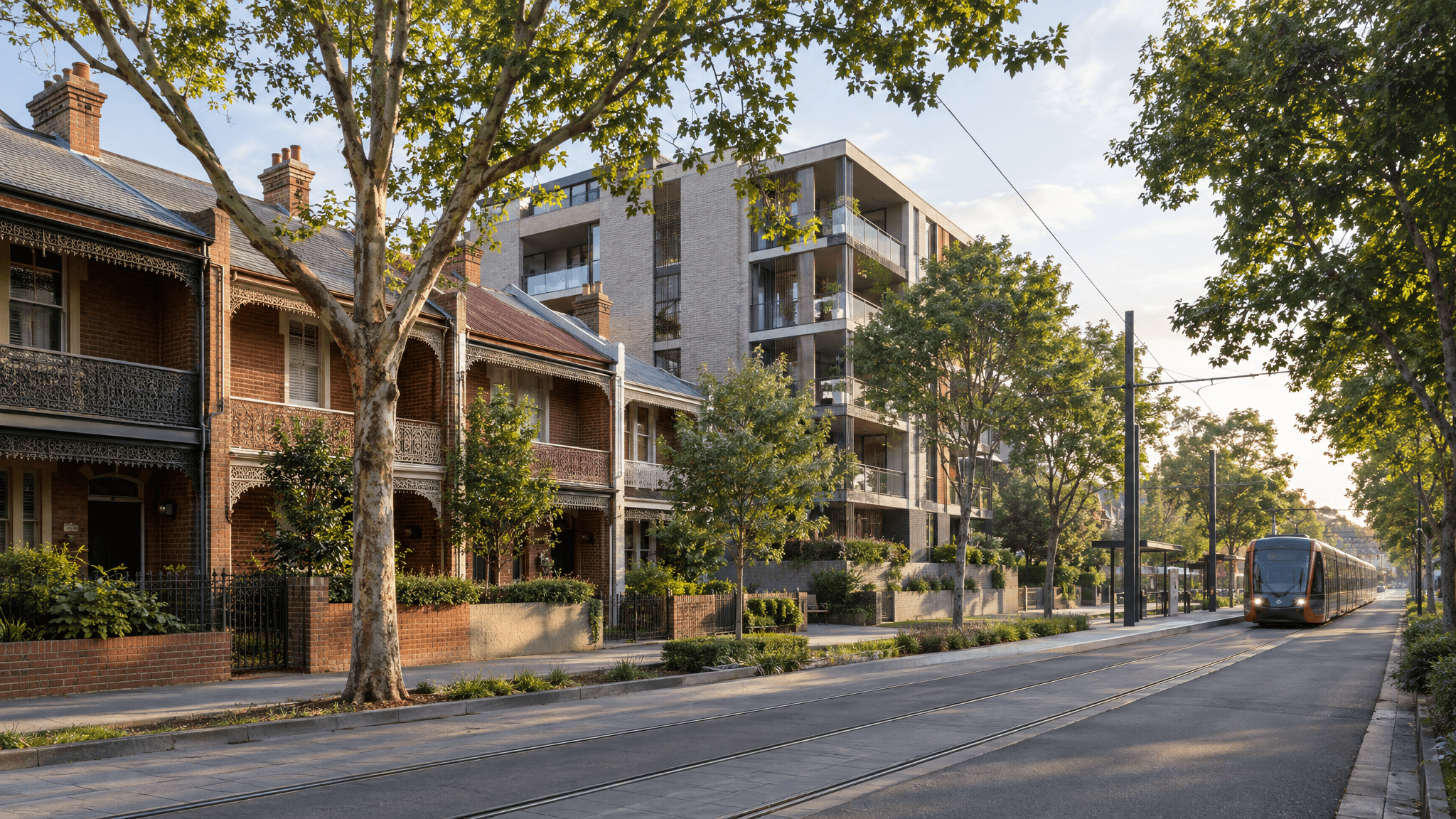
More housing around transport corridors, renewal precincts and some inner-city heritage areas is being considered under the next stage of the City of Sydney’s long-term housing work.
A report presented to the council’s Equity and Housing Committee on Monday recommended endorsement of an interim implementation plan following consultation on the Housing for All discussion paper. A final council decision is scheduled for 26 October.
The documents do not approve particular towers, change zoning immediately or guarantee that identified sites will be developed. They instead set out the investigations, planning work and advocacy the City may undertake before updating its local housing strategy.
That distinction is important for property owners and prospective buyers. An area being named for investigation can influence expectations, but detailed controls, infrastructure studies, public consultation and separate approvals would still be required before development occurs.
A larger housing task for inner Sydney
The City said more than 46,000 private dwellings had been built in its local government area since June 2004. A further 11,000 non-private dwellings with shared facilities, including student accommodation and co-living housing, were also completed.
The NSW Government’s Sydney Plan has now given the council area a target of 18,900 additional dwellings by 2029, described in the committee report as one of the region’s highest. Councils are also expected to keep 30 years of feasible housing capacity within their planning controls.
The City received 1,685 consultation responses from 865 people and organisations. About 65 per cent of feedback supported additional housing, although views differed on its scale, location and form.
Support was generally strongest for housing near centres, public transport corridors and larger redevelopment sites. Concerns focused on infrastructure, heritage, neighbourhood character, open space, traffic and building quality.
Areas identified for investigation
The report lists Ultimo and Pyrmont among the short-term priorities, alongside possible higher-density opportunities in Newtown and Erskineville in collaboration with Inner West Council.
Further short-term investigations may include the area of Paddington between Oxford Street and Moore Park Road, land around the Entertainment Quarter, and heritage conservation areas in Surry Hills, Darlinghurst and Potts Point–Elizabeth Bay.
Longer-term work could examine housing around the Surry Hills light rail stop, subject to infrastructure capacity, and whether some locally significant industrial land could evolve into mixed-use precincts.
These broad areas contain very different streets, sites and existing uses. Inclusion in the plan should not be read as a blanket proposal to apply the same height or density everywhere.
The consultation also called for larger apartments suitable for families, accessible housing, natural light, ventilation, privacy, storage and better sound insulation. Respondents supported more social and affordable rental housing, while industry submissions emphasised project feasibility, clearer controls and faster decisions.
Infrastructure will shape what can be delivered
Public transport was the most frequently raised infrastructure issue. Residents and organisations also identified schools, hospitals, parks, community facilities, utilities, wider footpaths and safer walking and cycling connections as necessary companions to additional homes.
The proposed response includes closer engagement with NSW infrastructure agencies when planning proposals are prepared. The City also intends to prepare a new development contributions plan to replace its 2015 plan, helping fund local facilities as the population grows.
The interim work is expected to feed into an updated local strategic planning statement and local housing strategy. The NSW Government is expected to direct councils to update those documents in 2027.
For owners, buyers and sellers, the immediate news is therefore about planning direction rather than an overnight change in development rights. The detailed investigations that follow will determine which properties are affected and whether additional capacity can be delivered economically.
What it means for you
- No property has received new development rights merely because its area appears in the draft plan.
- Buyers should check current planning controls and formal proposals rather than relying on future-density speculation.
- Owners in investigation areas should watch upcoming exhibitions, infrastructure studies and zoning proposals.
- More capacity may improve long-term supply, but construction costs and infrastructure will determine how many homes are actually built.