Woollahra’s 9,400-home rezoning faces a delivery gap
NSW is planning capacity for about 9,400 homes around Edgecliff and Woollahra stations, but government analysis and reported Treasury advice point to substantially fewer homes being delivered by 2046.

RentBuy Team
4 min read
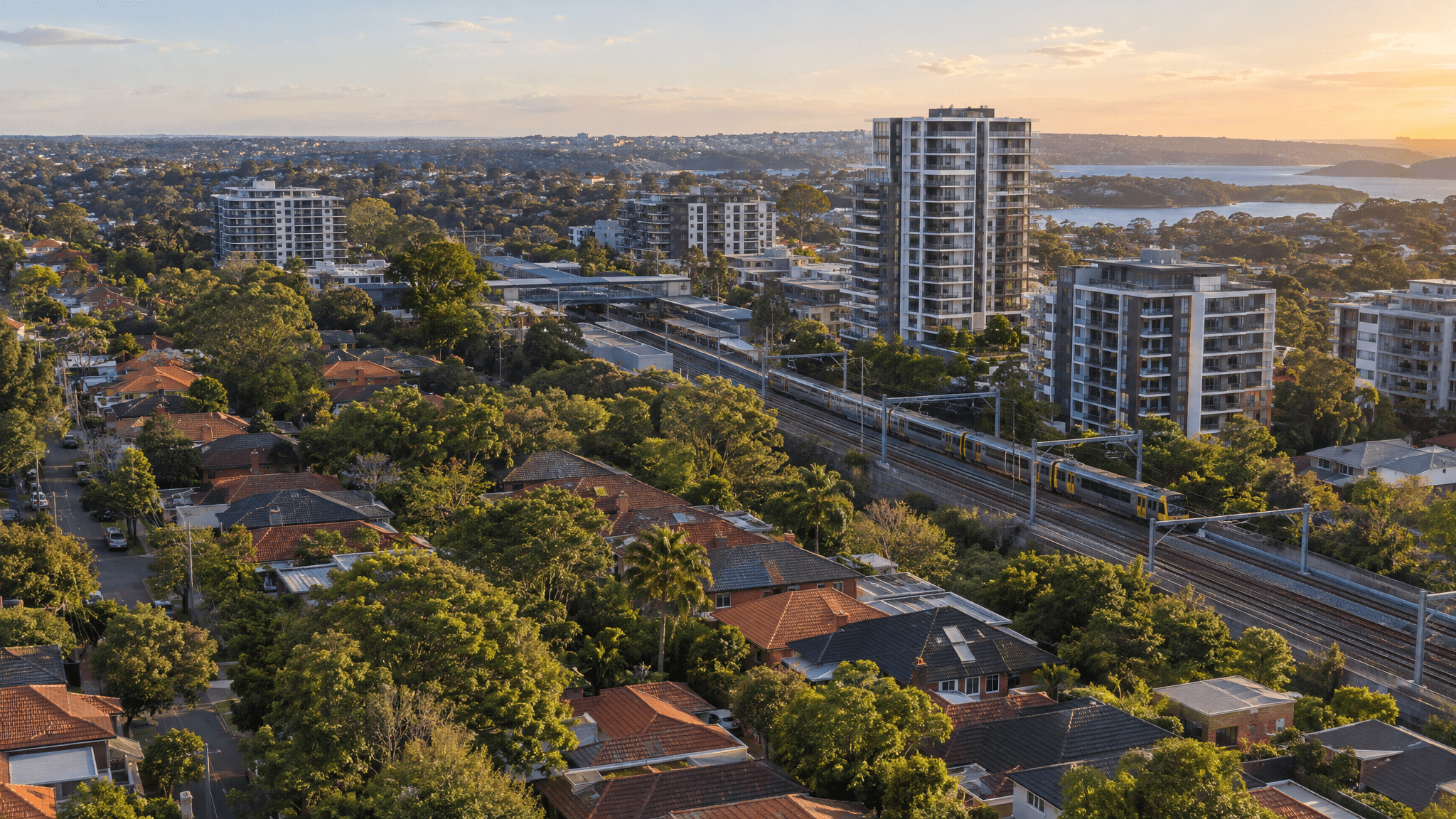
The NSW Government’s plan for about 9,400 additional homes around Edgecliff and the future Woollahra railway station faces a fundamental question: how much of the rezoned capacity will actually be built?
The Australian Financial Review reported on Friday that confidential documents released to the NSW Parliament showed Treasury officials had warned the Premier’s office in July that the proposed housing number was not achievable. High land values and fragmented ownership were identified as obstacles to assembling viable development sites.
That warning sharpens an important distinction in the housing debate. Changing planning controls can create room for thousands of dwellings, but it does not compel owners to sell, developers to amalgamate sites or banks to finance projects.
The government’s own commissioned economic assessment has estimated that almost 4,800 dwellings could be delivered in the precinct between 2026 and 2046. Woollahra Council’s alternative approach provides for up to 3,600 homes.
Both figures sit well below the state’s headline number.
What the draft rezoning allows
The 168-hectare draft precinct covers land around the existing Edgecliff station and the proposed Woollahra station on the Eastern Suburbs railway line.
According to the NSW Planning Portal, the proposed controls would allow buildings of up to 34 storeys near Edgecliff station and 32 storeys near Woollahra station. They would also provide for a larger Edgecliff retail centre, a new local centre at Woollahra and up to 1,000 jobs.
The plan includes an affordable housing contribution of 3 per cent in perpetuity, rising to as much as 15 per cent on certain sites. It also proposes about 3.5 hectares of new or upgraded public space across 13 parks, plus new walking and cycling connections.
Public exhibition closed on 30 October, and the Department of Planning says feedback will be considered before the proposal is finalised in 2027.
The government has presented the rezoning as a way to put more homes close to central Sydney, existing jobs and public transport. It also argues that Sydney’s east should accept more growth rather than leaving most new housing to western suburbs.
Planning capacity is not the same as supply
The gap between the 9,400-home proposal and the forecast delivery of about 4,800 does not necessarily mean the planning work is pointless. Rezoning can remove one barrier and give future projects a pathway that does not exist under current controls.
However, established suburbs create practical difficulties that greenfield sites and single-owner redevelopment areas do not face. Apartment projects may require several adjoining houses or strata buildings to be acquired. Owners must agree to sell, and the combined purchase price still needs to leave enough room for construction, finance, taxes and an acceptable development margin.
Rezoning can also increase landowners’ expectations before a site has become viable. If several owners hold out for a larger share of the anticipated uplift, a possible project can stall indefinitely.
This is why announced dwelling capacity should not be treated as a construction timetable. The delivery rate will depend on site consolidation, market demand, building costs, finance and the completion of supporting infrastructure, particularly the new station.
For nearby owners, higher permitted density may create redevelopment interest, but it does not guarantee that an individual property will be bought by a developer. For buyers and renters hoping for more housing choice, the benefits are likely to arrive gradually rather than as an immediate wave of new apartments.
What it means for you
- Buyers and renters should view 9,400 homes as a long-term planning figure, not a near-term supply forecast.
- Owners inside the precinct should seek independent planning and valuation advice before assuming rezoning will produce a development premium.
- Apartment supply will depend heavily on whether fragmented sites can be combined at workable prices.
- The final controls and infrastructure commitments may change when the rezoning is determined in 2027.