WA proposes state-led density rules around eight Perth train stations
Draft planning rules would put the state in charge of zoning, density and building standards across eight established Perth station precincts, opening more land to apartments, terraces and townhouses.

RentBuy Team
4 min read
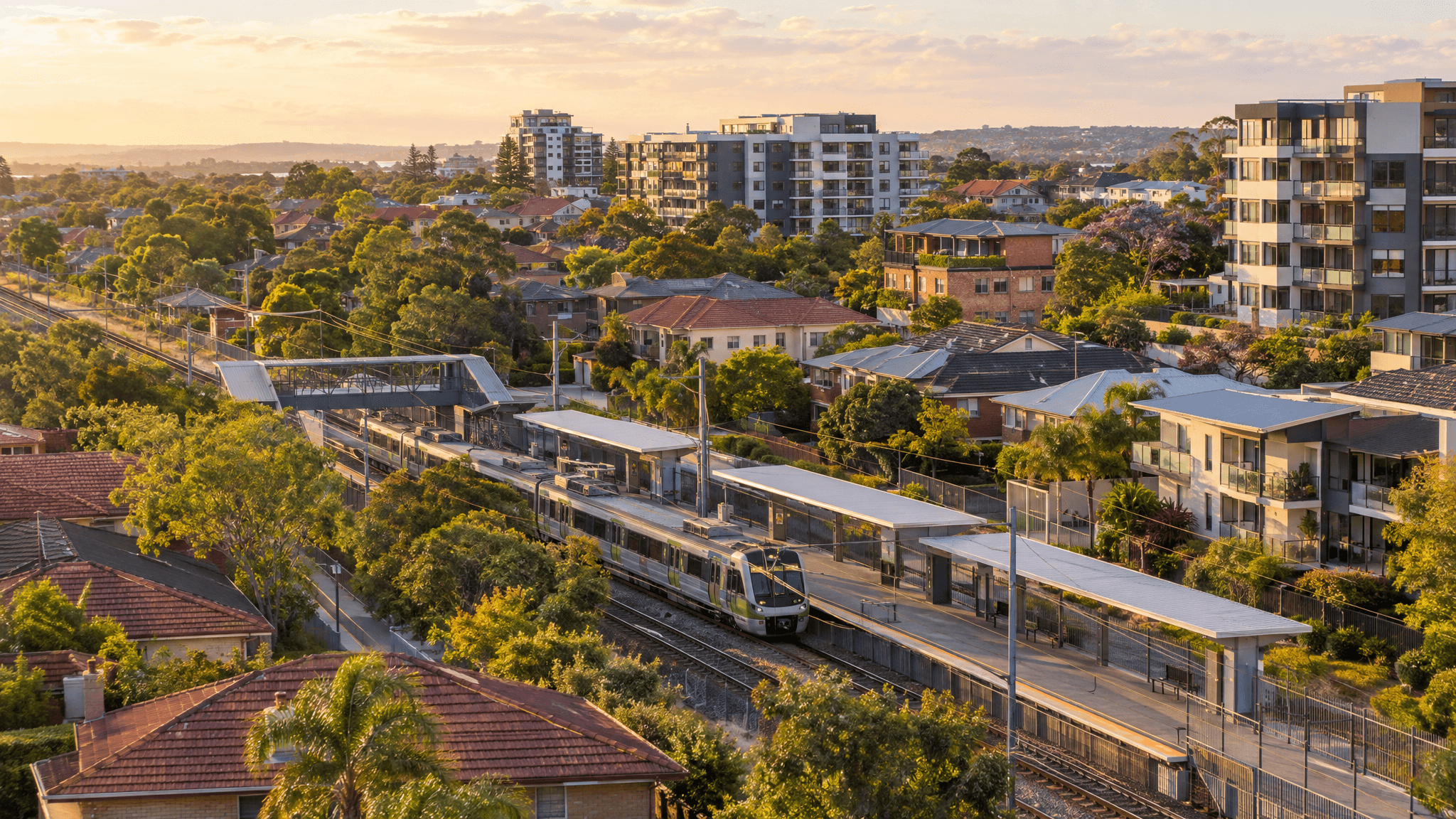
Western Australia is proposing a single state-led planning scheme for eight established Perth train station precincts, with new zoning, density and building controls intended to create more homes near public transport.
The late-Saturday reporting by The West Australian highlighted that the draft rules would establish minimum density expectations and substantially reduce the role of local councils in deciding the main planning framework.
The WA Government’s draft Station Precincts Improvement Scheme No. 1 covers Bassendean, Carlisle-Oats Street, Claisebrook, Cottesloe, Glendalough, Morley, Mosman Park and Swanbourne. Public consultation is open until 12 February 2027.
Ballajura and Redcliffe are also part of the broader Precincts WA program but are being handled through separate improvement schemes.
What the proposed scheme changes
An improvement scheme is a statutory planning instrument under WA’s Planning and Development Act. Once approved, it becomes the primary planning scheme within its boundaries, replacing the relevant local planning scheme.
The draft sets proposed zoning, residential density codes and built-form standards for each precinct. These standards can include building heights, setbacks and rules governing what types of development are permitted.
Higher densities and taller buildings are generally proposed closer to stations, shops and services. The government says the settings also account for existing development patterns, heritage, local character and lot sizes.
The Western Australian Planning Commission would make planning decisions under the scheme, although it could delegate some decisions to local governments.
That represents a significant shift from the usual council-led planning structure. A common set of state rules could reduce differences between neighbouring council areas and give developers greater certainty about what can be built.
More capacity does not mean immediate construction
The scheme would create development capacity rather than require owners to redevelop their properties.
Existing homes could remain as they are, and owners would decide whether and when to sell, renovate or pursue redevelopment. Valid planning and subdivision approvals would also remain in force under their existing conditions.
The government expects most eventual housing to be delivered by private landowners and developers. It will also examine surplus government-owned land in and around the precincts for potential housing opportunities.
Housing types contemplated by the program include apartments, townhouses and terrace homes. These could provide options for smaller households, first-home buyers and downsizers in suburbs where detached houses dominate.
However, rezoning alone does not guarantee homes will be built. Projects still need suitable sites, finance, construction capacity, buyer demand and feasible development costs. Fragmented land ownership can also make apartment or townhouse projects difficult to assemble.
Heritage, infrastructure and neighbourhood change
The draft does not remove protections applying to places on the State Register of Heritage Places or Aboriginal heritage. Properties already recognised on local heritage lists are proposed to be addressed through a separate heritage policy for the scheme area.
Infrastructure will be an important part of consultation. More residents can support public transport and local shops, but growth also increases demand for schools, utilities, parks, walking routes and community facilities.
The government is seeking feedback on whether new developments should contribute towards public-realm improvements such as street trees, shade, seating and landscaping.
Parking and traffic will continue to be considered in individual development applications. The policy’s broader objective is to place more people within walking or cycling distance of rail services, reducing the need for every additional trip to be made by car.
The draft scheme is expected to be considered by the Planning Commission and the responsible minister after public submissions are reviewed. The government anticipates the new scheme could be operating in 2027.
For property owners, the immediate task is to check whether their land sits inside a draft precinct boundary and what density code is proposed. A higher development potential can affect buyer interest and long-term value, but the practical outcome will depend on detailed standards and whether redevelopment is commercially viable.
What it means for you
- Owners in the eight precincts should check the draft zoning and density code for their property.
- Buyers should not assume a higher density code guarantees a future development or windfall.
- Apartment and townhouse supply may increase gradually near established rail stations.
- Public submissions on the draft scheme close on 12 February 2027.