Short-stay rentals cluster heavily in coastal housing markets
New analysis finds whole-home short-stay listings are concentrated in selected coastal suburbs, although their share is much smaller across entire capital-city rental markets.

RentBuy Team
4 min read
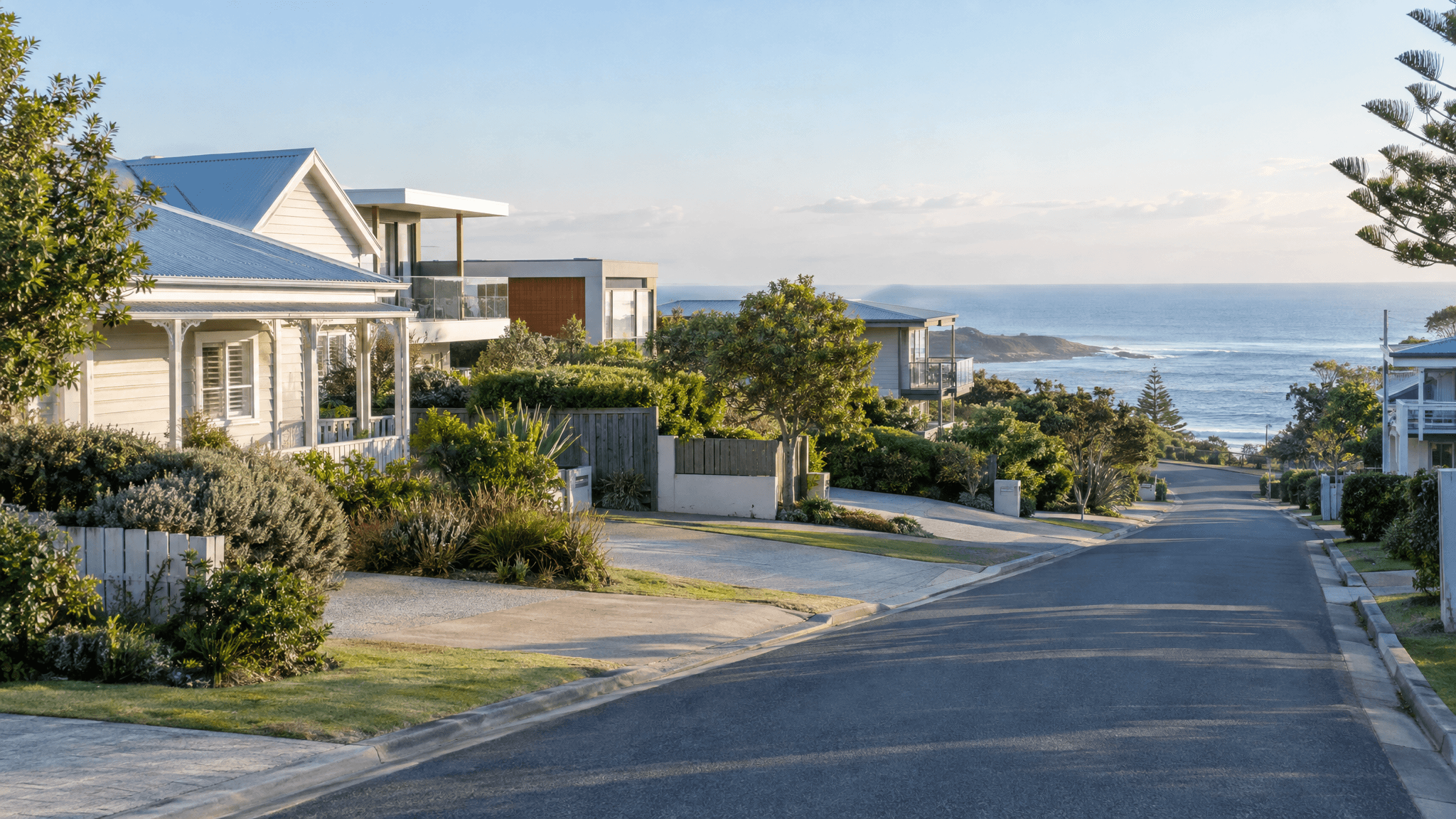
Whole-home short-stay listings account for a substantial share of rental properties in some Australian coastal suburbs, while having a far smaller footprint across capital cities as a whole, new analysis published on Saturday shows.
The research commissioned by removal company Fox Removals compared 28,679 whole-property Airbnb listings across 850 suburbs in Greater Sydney, Melbourne, Brisbane and Perth with the number of privately rented homes recorded in the 2021 Census.
Realestate.com.au reported that Rye, on Victoria’s Mornington Peninsula, had the highest estimated concentration, with the number of Airbnb listings equivalent to about 44 per cent of the suburb’s rental housing stock.
Other Mornington Peninsula suburbs, including Capel Sound, Dromana, Mount Martha, Rosebud and Safety Beach, also appeared among the markets with the highest short-stay concentrations.
The Sydney results demonstrate how sharply the picture changes between individual tourism markets and a whole city. Avalon Beach had 127 whole-home Airbnb listings against 559 private rentals, equivalent to about 23 listings for every 100 rentals. Millers Point recorded roughly 22 per 100, while Manly had the largest raw number at 442 but a lower ratio of about 12 per 100.
Across Greater Sydney, however, there were fewer than two whole-home Airbnb listings for every 100 private rentals.
Large operators control a sizeable share
The analysis also examined who controlled the listings. It found that 9,630 properties, or 33.6 per cent of those counted, were associated with 380 host accounts operating at least 10 listings each.
That distinction matters for housing policy. A household occasionally renting its home while away is different from an operator managing a portfolio of whole dwellings throughout the year. Rules based only on the total number of hosts can miss how much stock is controlled by larger businesses.
The new figures are consistent with broader Australian Housing and Urban Research Institute research showing that short-term accommodation is highly concentrated geographically. AHURI found that the effect on housing is most significant in tourism-dependent communities where short-stay homes can greatly outnumber the limited number of long-term vacancies.
For renters in those locations, even a modest shift of properties back to permanent tenancies could create meaningful extra choice. The same intervention would have much less effect in a typical metropolitan suburb where short-stay properties represent only a small part of the rental pool.
The comparison has limitations
The suburb ratios should be treated as a snapshot rather than a precise measure of homes removed from the rental market.
The analysis compares September 2026 Airbnb listings with private rental numbers from the 2021 Census. Local populations and housing stocks have changed during those five years, and not every home offered for short stays would otherwise be available to a permanent tenant. Holiday houses used by their owners, for example, may never enter the long-term rental market.
A listing count also does not establish that short-stay accommodation caused local rent rises. Construction levels, population growth, investor activity and the availability of social housing all affect rents.
Airbnb has previously pointed to analysis it commissioned from Urbis that found no consistent relationship between the local proportion of non-hosted short-stay accommodation and long-term rental vacancy rates. The platform argues that planning restrictions and insufficient construction are more fundamental causes of Australia’s housing shortage.
The two positions are not necessarily incompatible. Building more housing remains the long-term requirement, while tightly concentrated short-stay markets may justify local rules that would have little value across an entire city.
Options already used or debated around Australia include registration systems, annual night limits, planning approval requirements, levies and stronger enforcement against unregistered operators. The new data suggests these measures are most likely to improve rental availability when they are targeted at specific hotspots and whole-home commercial portfolios.
What it means for you
- Renters in major holiday suburbs may face greater competition because a significant share of local housing is being offered to visitors.
- Investors should check council and state short-stay rules before relying on holiday-letting income.
- Citywide restrictions may have limited rental benefits where whole-home short stays represent only a small share of housing.
- Suburb ratios based partly on 2021 Census data should be read as estimates, not a live count of homes available for permanent rent.