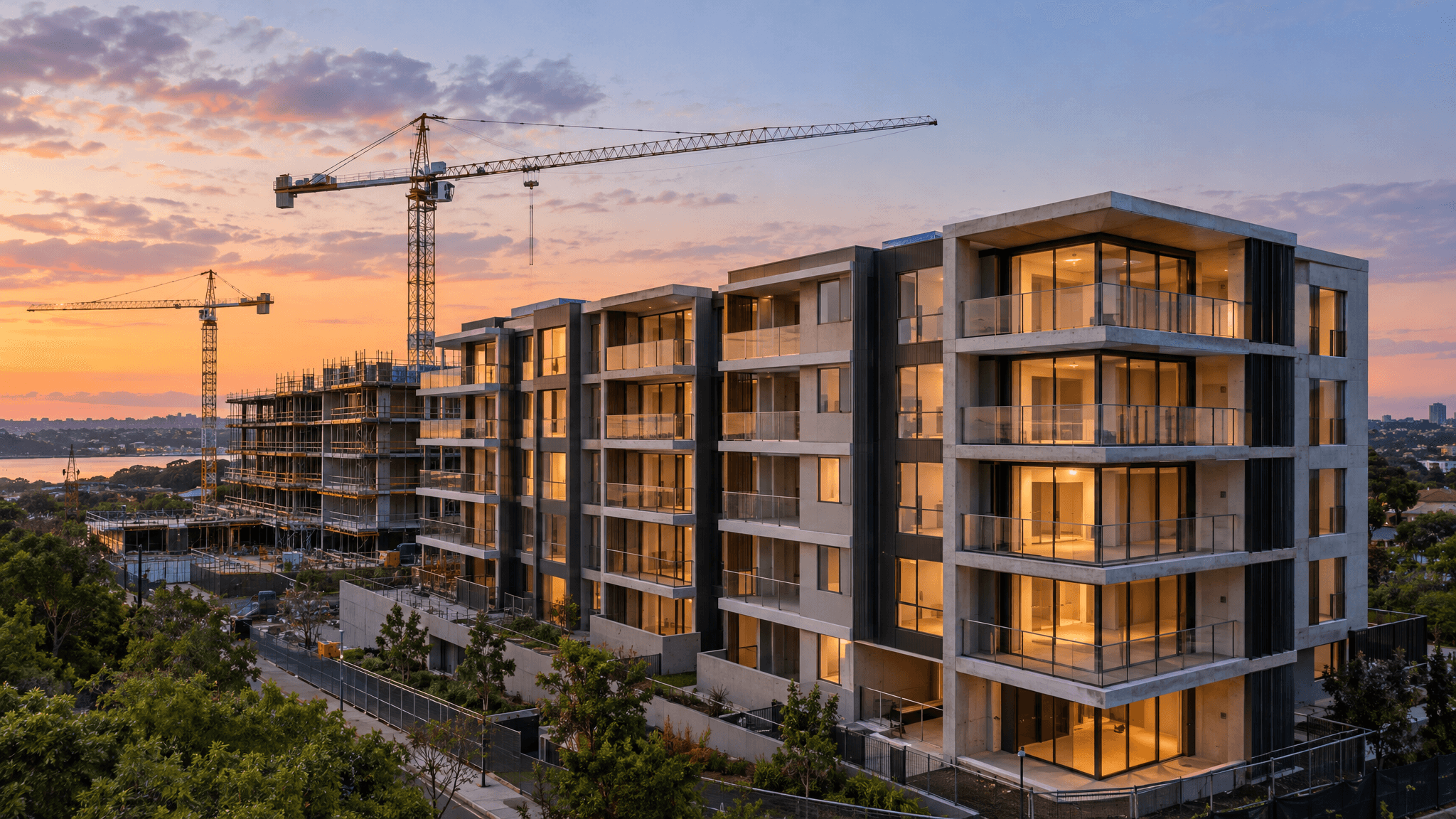
Regional NSW price growth holds up as Sydney downturn deepens
Inland centres including Dubbo, Armidale and Wagga Wagga have recorded double-digit annual growth, highlighting a widening divide between affordable regional markets and falling Sydney prices.

RentBuy Team
4 min read
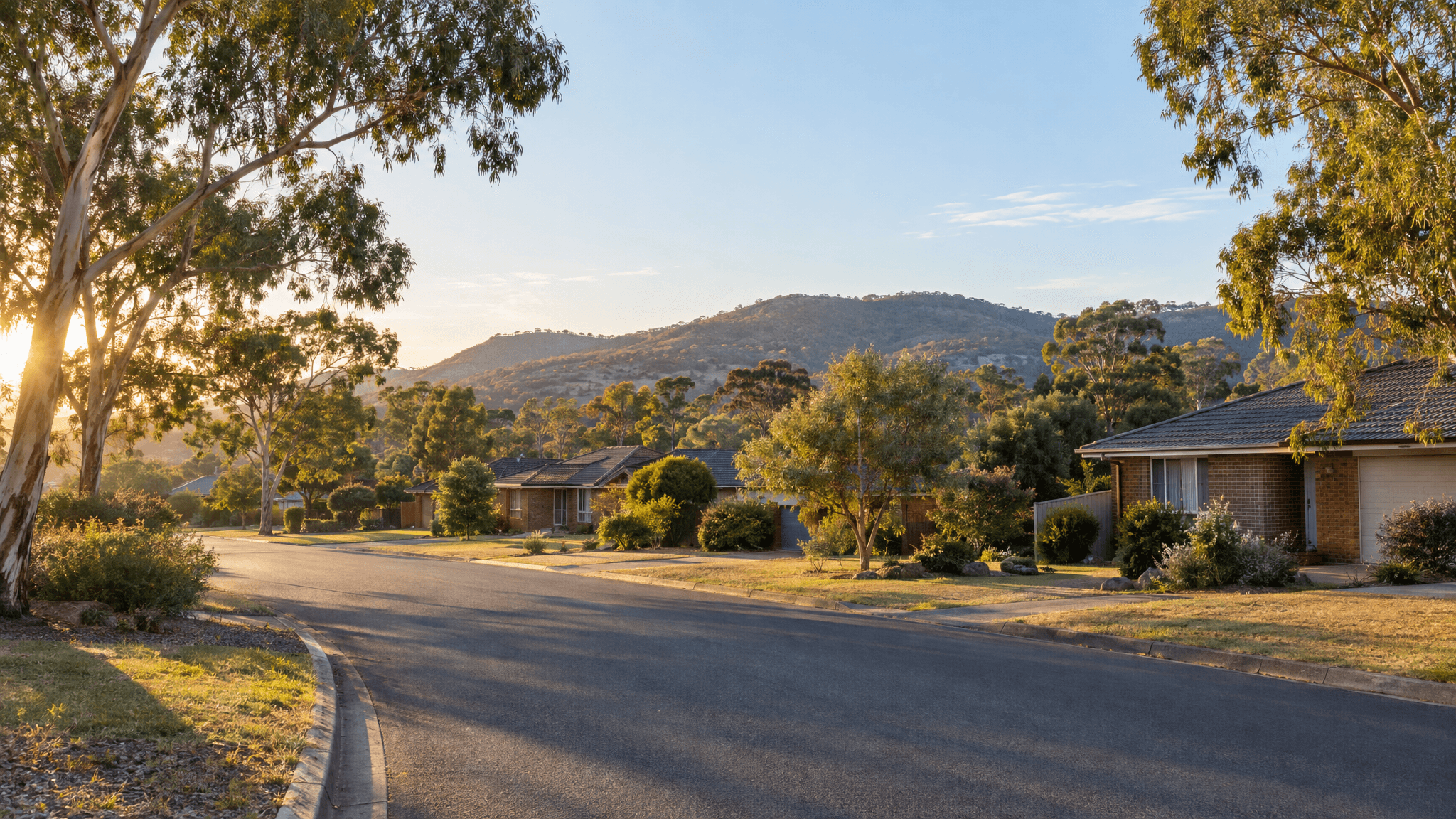
Some inland NSW housing markets are continuing to record solid annual gains even as Sydney values fall, showing that the national downturn is not moving evenly across locations or price brackets.
The Australian Financial Review reported on Saturday that buyers seeking a more affordable lifestyle were supporting prices in regional centres. October data from Cotality provides the clearest measure of that divide: dwelling values rose by more than 10 per cent over the year in several inland NSW regions.
Dubbo led the state’s regional growth table with an annual increase of 11.7 per cent and a median dwelling value of $580,697. It was followed by the Lower Murray, up 11.2 per cent to $394,877, and Armidale, up 10.9 per cent to $595,798.
Wagga Wagga values increased 10.5 per cent to a median of $632,594. Other comparatively strong markets included the Lachlan Valley, Griffith–Murrumbidgee West, Inverell–Tenterfield, Tumut–Tumbarumba, Lithgow–Mudgee and Bathurst.
These figures cover Cotality’s statistical regions rather than individual suburbs, and median values are estimates of the middle of the local market. They should not be read as meaning every property in those areas rose by the headline rate.
A two-speed NSW market
The performance of those inland regions contrasts sharply with Sydney. The realestate.com.au Market Snapshot for October recorded a 6.6 per cent annual decline in Sydney home prices, while regional NSW remained 1.4 per cent higher over the same period.
That relatively modest regional average also shows how concentrated the strongest growth has been. Coastal, prestige and expensive regional markets can behave differently from inland centres where buyers can still find detached houses below capital-city prices.
The same Market Snapshot found lower-priced homes had recorded much stronger cumulative growth than middle and upper price brackets since January 2022. That helps explain why some affordable regional centres can continue rising while expensive capital-city markets weaken under higher interest rates.
A buyer whose budget no longer reaches a suitable Sydney house may have substantially more choice in a centre such as Dubbo, Armidale or Wagga Wagga. Local buyers and investors are competing in the same segment, however, so affordability-led demand can quickly lift prices when the number of available homes is limited.
Affordability does not remove regional risks
A lower purchase price can reduce the deposit and debt required, but regional property needs more than a comparison with Sydney’s median. Buyers should examine the depth of the local employment market, population trends, rental demand and the number of comparable homes available for sale.
Insurance costs and exposure to flood, bushfire or drought can materially change the cost of ownership. Older houses may also require substantial work, while buying vacant land introduces construction costs, delays and servicing questions that are not reflected in the land price.
Buyers moving from a capital city should also test whether local transport, health, education and telecommunications meet their long-term needs. A property can appear inexpensive without necessarily being suitable or easy to resell.
For sellers, the figures are encouraging but do not justify assuming double-digit growth applies across an entire town. Condition, neighbourhood, land characteristics and the property’s likely buyer pool remain important, particularly as higher mortgage rates reduce borrowing capacity nationally.
Regional NSW is not one market: inland affordability is supporting some centres while the broader housing downturn continues.
What it means for you
- Buyers should compare individual suburbs and recent comparable sales, not rely on a regional growth ranking.
- Check insurance, natural-hazard exposure and local employment before treating a lower price as better value.
- Sellers in stronger inland markets may have more support than Sydney vendors, but realistic pricing still matters.
- Investors should test rental demand and ongoing costs rather than assuming recent capital growth will continue.